Please Join Me for a Hands-on Portraiture Workshop: Learn to make beautiful portraits using natural light

Dear Readers,

If you’d like to learn how to make beautiful portraits using just natural light and a few simple techniques, then please join me for a 2-hour hands-on workshop/class that I’ll be teaching several times over the next few weeks. Held in a scenic location in Mountain View, CA, these classes will cover the basics of techniques and tools, and then we’ll practice by shooting in the field with a wonderful model. Learn more or register for a session here: Kyle’s workshop on portraiture using natural light.

In today’s post I am sharing a few favorite images that we shot during a recent session of this workshop.  Working with our wonderful model Roxy, I walked students through the entire process of creating stunning headshots, full-body and action portraits, and environmental portraits, all using only natural light and with a minimum of gear, fuss, and bother.  Students learned how to configure their cameras, what lenses to choose for different portrait situations, where to shoot, how to pose and direct the model, how to use light modifiers (reflectors and diffusers), and much more.

Learning to capture flattering and eye-catching headshots is a basic requirement for portrait photography.

We will also learn to make full-body and action shots that bring out our subject’s true personality.

Always be on the lookout for special and playful moments.

I emphasize the artistic as well as the technical aspects of portrait photography.

Roxy really went the extra mile by climbing a tree wearing heels and a red dress!  In my hands-on portrait workshops, we will collaborate with fun and creative models.  Students will gain skills and a comfort level in directing models, even if they have never worked with a model previously.

You can see more details and book a session of the class here: Kyle’s workshop on portraiture using natural light.  More dates will be added soon. Hope to see you at one of these sessions!


“To Travel Hopefully” News Flash!: I am honored to be a winner of the Peninsula Photography Contest

Dear Readers,

I’m proud to report that one of my images was selected as a winner in the Peninsula Photography Contest. It will be exhibited at the Palo Alto Art Center from May 19 through June 17, and will also be featured in several publications and websites.

The winning image, submitted in the Travel Photography category, is a favorite from my recent travels in Myanmar.  It’s part of a series that depicts the difficult plight of the children of the “Bamboo Village”, an informal housing settlement outside of the capital city of Yangon (Rangoon), where 10 years after the disastrous typhoon struck Myanmar many of the displaced are still living in squalid conditions with little government support.

To me, travel photography is about more than just creating art: it’s also a means to connect with local people, capture a strong sense of place, and advocate for social change and justice.  As readers of To Travel Hopefully, you’ve seen me return to these themes again and again.  So I’m especially honored to have this particular image featured in the Peninsula Photography Contest’s winners gallery, and pleased to have this opportunity to share the image and the story behind it more broadly.

The winning image: “A fascinating visit to an informal housing settlement inhabited by people displaced by the devastating 2008 typhoon. A decade later they are still living in squalid conditions in bamboo huts with no running water. Here, children are filling containers with water from the lake and carrying 40 kg (88 pounds) of water, often more than their body weight, several miles to their families’ homes.”

If you live in or near the San Francisco Bay Area, please come to the show at the Palo Alto Art Center between May 19 and June 17.  Thank you for your ongoing support!

I See a Little Silhouetto of a Man [Encore Publication]: Intentionally underexposing your subject can create dramatic images

A silhouette is an image rendered as a solid shape of a single color with its edges showing the outline of the subject.  In photography this is a rather easy effect to achieve.  Simply by underexposing the subject by several stops, all the shadow detail is lost and the subject will appear as an outline in black.  This technique can yield dramatic, powerful images if used properly and sparingly.

When the subject is already backlit, just expose for the background and then dial down the exposure by approximately two stops.  This image of a man fishing off the seawall at the Malecon in Havana, Cuba works effectively as a silhouette.  The subject was strongly backlit by the late afternoon sun reflecting off the ocean, so I exposed for the water and compensated by another two stops.  The resulting photo is more evocative of the mood of quiet contemplation than it would be had I exposed for the fisherman.

This shot of a man fishing off a sea in Havana is rendered more powerfully with the subject in silhouette.  Buy this photo

During a studio shoot with a yoga and fitness model, we decided to try something different.  We turned off the main light and the fill light that ordinarily illuminate the model, and instead turned up the intensity of the lights on the white backdrop.  The resulting images showed the model in full silhouette as she dances and performs yoga poses.

In the studio, turning off the primary lights and increasing the brightness of the back lights yields a true silhouette.  This image is striking because it reduces the model’s form to an outline, emphasizing her motion.  Buy this photo

The silhouette is a simple technique you can use to get creative in your photography.  Experiment away–memory cards are cheap!

When do use the silhouette as a photographic technique?  Please share your tips here.

Want to see more posts on techniques?  Find them all here: Posts on Techniques.


Rock Solid [Encore Publication]: Why you should always have a tripod with you

Tripods have had their ups and down, so to speak.  When photography was in its infancy, the wet plates used to make the images were very slow, so extremely long exposures were required and the cameras were big and bulky, so use of a big, heavy wooden tripod was essential.  It’s all the more remarkable when looking at the incomparable work of Ansel Adams to realize that in order to make these images he had to hike miles up steep mountain trails with a heavy view camera, several big and fragile plates, and an enormous tree trunk of a tripod.  As cameras became smaller and film faster, tripods went out of style except for certain low-light situations for professionals.  Now, more and more enthusiast photographers are recognizing the value of a sturdy tripod for capturing the best possible quality images of landscapes, buildings, and of course night scenes.  In some iconic travel spots, it’s hard to find space to shoot amidst the ocean of tripods.

Sure, they’re heavy and bulky, particularly when we’re hiking or walking for long stretches.  But a good solid tripod is essential for so many types of shots that I now carry one with me at nearly all times.

An example of a technique requiring a tripod even in bright light is high dynamic range (HDR) photography.  To make an HDR image, you shoot a series of photos of the exact same scene in rapid succession, varying the exposure by a little bit between each frame, and then use special software during post-processing to bring out all brightness levels in the image, from the dark shadows to the brilliant highlights.  But if the camera moves at all between the shots, it becomes harder to stitch the shots together into a beautiful HDR image.  I’ve been known to handhold some HDR shots, but I strongly recommend shooting them using a tripod.  Of course, you’ll also want a tripod for low-light and nighttime photography, and they’re very useful for landscape images where the high resolution of your camera’s sensor is called upon to render extremely fine detail throughout the scene.  And let’s not forget that to include yourself in a scene, use of a tripod makes life a lot easier.

Although I was shooting in bright sunlight, I needed a tripod to make this HDR image of Yosemite Valley peaks reflected in the Merced River.  If the camera moves at all between frames, it is harder to combine them into the final photo.  Buy this photo

For most travel situations, you’ll want a lightweight tripod that folds up to a portable size but still offers enough stability for most uses.  There are times, though, when I need to bring along my heavy and bulky professional tripod.  Whatever tripod you choose, be sure to fit it with a good quality head–ball heads provide a lot of flexibility and ease of use for travelers–and remember to take along the plate that attaches the tripod to your camera, if required.

My go-to lightweight travel tripod is the Manfrotto Be Free.  It folds up to an incredibly small size yet affords a surprising amount of stability.  The included ball head works well but is difficult to adjust for sensitivity.  This tripod is designed to fit into a specially designed pouch in my favorite travel photography backpack, also made by Manfrotto.

The SLIK 615-315 is a great tripod for use close to home or on trips where you will have constant vehicle support.  It’s very solid, supports a tremendous amount of weight, and can be adjusted for nearly any shooting situation.  I recommend you fit it with a good ball head for maximum flexibility.

A monopod can be a real problem solver when you need more stability than handholding or resting your camera on a vehicle or table will afford, but you can’t carry or use a full tripod.  I use the Manfrotto 681B model.

To be sure, if you know 100 photographers, you’ll hear 110 different opinions about tripods and the heads and plates that go with them.  The products listed above are my recommendations only, but I’ve had good experiences using them.  For those with a lot more money to spend, tripods and heads made by Really Right Stuff are much beloved by professional and well-heeled enthusiast photographers.

What combination of tripod, head, and plate do you use, and why?  Please share your recommendations here.  Tripods are one piece of gear with which we’re constantly experimenting, so bring it on!

Want to read more posts about photography gear?  Find them all here: Posts on Gear


Please Join Me for a Hands-on Portraiture Workshop: Learn to make beautiful portraits using natural light

Dear Readers,

If you’d like to learn how to make beautiful portraits using just natural light and a few simple techniques, then please join me for a 2-hour hands-on workshop/class that I’ll be teaching several times over the next few weeks. Held in a scenic location in Mountain View, CA, these classes will cover the basics of techniques and tools, and then we’ll practice by shooting in the field with a wonderful model. Learn more or register for a session here: Kyle’s workshop on portraiture using natural light.

In today’s post I am sharing a few favorite images that we shot during a recent session of this workshop.  Working with our wonderful model Roxy, I walked students through the entire process of creating stunning headshots, full-body and action portraits, and environmental portraits, all using only natural light and with a minimum of gear, fuss, and bother.  Students learned how to configure their cameras, what lenses to choose for different portrait situations, where to shoot, how to pose and direct the model, how to use light modifiers (reflectors and diffusers), and much more.

Learning to capture flattering and eye-catching headshots is a basic requirement for portrait photography.

We will also learn to make full-body and action shots that bring out our subject’s true personality.

Always be on the lookout for special and playful moments.

I emphasize the artistic as well as the technical aspects of portrait photography.

Roxy really went the extra mile by climbing a tree wearing heels and a red dress!  In my hands-on portrait workshops, we will collaborate with fun and creative models.  Students will gain skills and a comfort level in directing models, even if they have never worked with a model previously.

You can see more details and book a session of the class here: Kyle’s workshop on portraiture using natural light.  More dates will be added soon. Hope to see you at one of these sessions!


Focus on Yellowstone and Grand Teton [Enore Publication]: The oldest national park in the US remains one of the best photographic destinations

My last visit to Yellowstone National Park and its nearby cousin Grand Teton National Park was in June of 2011, and I am long overdue for a return trip.  These two gems of the US National Park system are among the world’s best photographic destinations.  Featuring an amazing array of mountain scenery, geothermal activity, wildlife, and human cultural records, Yellowstone and Grand Teton are, simply put, indispensable destinations for travel photographers.  In today’s post, let’s look at a few of my favorite images from the 2011 trip and discuss how they were made.  While the parks haven’t changed too much over the past six years, the state of the art of photographic gear certainly has changed a great deal.  Today’s cameras and lenses will afford photographers even more options for capturing the remarkable beauty of these parks.

Yellowstone N.P. has more geothermal activity than any other region of the world, and this activity manifests itself in many fascinating ways.  The Mammoth Terraces area of the park is known for its gloriously delicate and colorful silica terraces, including the one in this image.  For a great landscape image, it’s best to combine the main subject (here, the silica terraces) with striking foreground and/or background elements (here, the Teton Mountain Range, behind).  I used a circular polarizing filter to bring out the drama in the sky and the highlights in the mountain range, but I dialed back the polarizing effect a bit so as not to eliminate the gorgeous reflections in the pools.  Buy this photo

Yellowstone and Grand Teton N.P.’s are filled with fascinating wildlife, including American bison, elk, wolf, coyote, marmot, osprey, and many other mammal and bird species.  Here I’ve captured (in images, of course) an intrepid coyote that cut across our hiking trail.  For striking wildlife portraits, it’s best to use a medium to long telephoto lens so as not to have to get so close as to stress the animal (or risk your own safety).  Tack-sharp focus is important, and I always strive to frame the subject with as uncluttered a background as possible.  Buy this photo

Photographs that tell stories are perennial favorites.  I love the humor apparent in this image, which tells the story of a standoff between a large male bison and two park rangers attempting to shepherd a convoy of park visitors across the field to an interpretive nature program and barbecue dinner.  At the time this photo was made, the bison was winning.  Buy this photo

Just as in a portrait of a person, a wildlife portrait should capture the spirit of the subject.  This large marmot was sitting up as if to get a better look at us.  His expression is both comical and wise.  To maximize the chances of capturing just the right expression and position, frame the subject first, set the proper focus and exposure, and then shoot continuously for several seconds.  Buy this photo

The quaint Chapel of the Transfiguration, located amidst some of the world’s most lovely mountain scenery in Grand Teton N.P., is a wonderful photographic subject.  Here I framed the Tetons in the chapel’s window and fired an off-camera speedlight to illuminate the walls and altar of the church.  Buy this photo

The iconic Moulton Barn sits on a field in Grand Teton N.P. with the glory of the Teton Mountain Range arrayed behind it.  This landscape image was made with great care to ensure a pleasing composition including barn, mountains, and cloudy sky, as well as to expose for the wooden texture of the barn.  A small aperture (high F-stop number) was used to keep the entire scene in focus.  I used a polarizing filter to bring out the drama in the sky and mountains, as well as to concentrate the lovely green and blue colors.  The scene was further enhanced to achieve a pleasing balance through tone and saturation adjustments in post-processing.  Buy this photo

I was drawn to the texture and patterns of the cracked muddy ground in a geothermal area of Yellowstone N.P.  Composing the image to include just enough of the pattern as well as leading lines to draw the eye downrange, I converted it to black-and-white and made adjustments to contrast and tonal range in post-processing.  Buy this photo

Yellowstone’s Grand Prismatic Spring is a breathtaking feature that is almost impossible not to photograph well.  That said, there are techniques to capture it in all its glory.  Grand Prismatic Spring is one of the world’s few iconic subjects that is best photographed in the harsh light of mid-day, when the reflection from the direct sun most vibrantly brings out the array of colors.  Unless you can shoot it from above, looking directly down on the spring, it is best to include some foreground and background elements other than the spring itself, to provide context.  Here, I framed the spring through some lodgepole pine trees and included some forests and mountains in the background.  Buy this photo

Every visitor to Yellowstone N.P. will stop to observe some geyser eruptions.  But instead of just shooting straight on during mid-day into the eruption of a famous geyser like Old Faithful, seek out some of the lesser-known geysers at sunrise and sunset, and compose to include compositional elements other than the eruption itself.  This image, a favorite of mine, was made on a geyser basin at sunset.  I set up the camera on a steady tripod, set the exposure for a wide depth-of-field, and composed the scene to include the cracked earth and and the reflection of the sunset and eruption within the pools of sulfurous water.  Buy this photo

I can hardly wait to return to Yellowstone and Grand Teton National Parks!  I’m even more eager to visit during the winter than during the much more crowded summer months.  The rich array of scenery, wildlife, and otherworldly geothermal features elevate these parks to the pinnacle of travel photography destinations.

Have you visited Yellowstone and Grand Teton?  What did you find most remarkable?  What do you recommend your fellow travel photographers shoot while there, and what techniques do you use?  Please share your comments here.

Want to read other posts about travel photography destinations around the world?  Find them all here: Posts on Destinations.


Please Join Me for a Hands-on Portraiture Workshop: Learn to make beautiful portraits using natural light

Dear Readers,

If you’d like to learn how to make beautiful portraits using just natural light and a few simple techniques, then please join me for a 2-hour hands-on workshop/class that I’ll be teaching several times over the next few weeks. Held in a scenic location in Mountain View, CA, these classes will cover the basics of techniques and tools, and then we’ll practice by shooting in the field with a wonderful model. Learn more or register for a session here: Kyle’s workshop on portraiture using natural light.

In today’s post I am sharing a few favorite images that we shot during a recent session of this workshop.  Working with our wonderful model Roxy, I walked students through the entire process of creating stunning headshots, full-body and action portraits, and environmental portraits, all using only natural light and with a minimum of gear, fuss, and bother.  Students learned how to configure their cameras, what lenses to choose for different portrait situations, where to shoot, how to pose and direct the model, how to use light modifiers (reflectors and diffusers), and much more.

Learning to capture flattering and eye-catching headshots is a basic requirement for portrait photography.

We will also learn to make full-body and action shots that bring out our subject’s true personality.

Always be on the lookout for special and playful moments.

I emphasize the artistic as well as the technical aspects of portrait photography.

Roxy really went the extra mile by climbing a tree wearing heels and a red dress!  In my hands-on portrait workshops, we will collaborate with fun and creative models.  Students will gain skills and a comfort level in directing models, even if they have never worked with a model previously.

You can see more details and book a session of the class here: Kyle’s workshop on portraiture using natural light.  More dates will be added soon. Hope to see you at one of these sessions!


“Building” Your Portfolio [Encore Publication]: Architecture gives local flavor and makes a great subject for your photography

Travel photography is exciting in large part because it encompasses all types of subjects.  In a single day while traveling, we may have the opportunity to shoot landscapes of the scenery around us, portraits of the people we meet, wildlife images of the fauna in the region, night images after the sun goes down, and photos of the local architecture.  I’ve already covered how to shoot most of these subjects in previous posts.  Today we’ll focus on how to make compelling images of architecture, which includes both the exteriors and interiors of the buildings we encounter.

For architectural photography, it is essential to carry a good wide-angle lens.  While I’m a big fan of prime (fixed focal-length) lenses, architecture is one subject where a zoom lens comes in very handy.  That’s because it can be difficult to change our vantage point when shooting large buildings in crowded urban environments.  And when photographing buildings, the widest end of the zoom range should be quite wide, indeed.  I recommend a lens that can zoom out to 16mm (for full-frame cameras) or even wider.  The lens doesn’t have to be particularly fast, because buildings do not tend to move quickly and we can use a tripod to steady the camera for longer exposure times, but it must be of very high optical quality for architecture photography.  Cheaper wide-angle lenses are prone to several kinds of distortion that can lend an unprofessional appearance to photos of buildings.  I recommend ponying up for a good professional quality wide-angle zoom lens with a range of somewhere around 16-35mm, or even a fast 14-24mm lens if you have the budget for it.

I use the Nikon 16-35mm f/4 lens for architecture shoots.  It’s got great image quality and is very solid and well built, but at f/4 it is not super fast, and it is rather heavy and bulky.

When shooting the exterior of a building with a wide-angle lens, we need to make an effort not to distort the lines of the building or its surroundings.  A wide-angle lens, especially when pointed upward, has the tendency to exaggerate features so that parallel lines appear to be divergent.  If you have the option of moving to a higher vantage point so you can shoot parallel to the ground instead of upward at the subject, this distortion can be greatly reduced.  But for those frequent situations when you have no choice but to look up at a building from the street level, try to zoom out so that the entire subject can be included in the frame without pointing the lens too far upward.  This image of a stately old building in Buenos Aires was made with the camera pointed nearly parallel to the ground so that even though a very wide focal length was required to fit the building in the frame, there is relatively little distortion of the perspective.
When using a wide-angle lens from street level, try to keep the camera pointed parallel to the ground to avoid severe distortion of the building’s lines.  Buy this photo

In contrast, the next image was shot from a vantage point at the same elevation as the subject, the world’s northernmost church.  I climbed a snowy hill in front of Svalbard’s chapel to attain the same height as the center of the building, so that I could hold the camera exactly level to the ground and still include equal amounts of the church above and below the center of the image.  This minimized the distortion and resulted in a more natural rendering of this fascinating building.

To make this photo of Svalbard’s church, I chose a vantage point at the same elevation as the midpoint of the building, minimizing distortion.  Buy this photo

I like to seek interesting colors and recurring patterns in architecture.  The miners’ houses in Svalbard made an intriguing subject because they were lined up in an even line of identical structures, but they varied in color.  To make the image more compelling, I moved across the street and shot with a moderate telephoto lens (65mm) to compress the scene and make the houses appear closer together.  I based the exposure on the light reflected from the paint on the houses, so that the snow in front of and behind the buildings was nearly blown out.  In post-processing I increased the vibrance slightly to bring out the bold colors in this scene.

Look for architectural scenes featuring interesting patterns and colors, such as this view of miners’ cottages in Svalbard surrounded by snow.  Buy this photo

Sometimes the most effective images of architecture hone in on the details rather than including the whole of the building.  I’m always on the lookout for a characteristic or unusual feature of the buildings around me. In New Orleans’s French Quarter, I framed this shot of a lovely wrought iron balcony using a long telephoto lens so that only this one feature of the building was included.

Zoom in on just the most characteristic or compelling features of a building to make an arresting image of the details rather than the whole building.  Buy this photo

Shooting interiors of buildings poses some of the same challenges as shooting their exteriors.  In particular, since a wide-angle lens is most often required and is frequently pointed upward, it is important to look at the edges of the viewfinder to try to minimize distortion of the building’s lines.  To make this wide-angle image of the inside of a grand mosque in Istanbul, I kept the camera level using a tripod and the camera’s virtual horizon function.  There was still a good deal of distortion around the edges of the upper part of the scene, but I was able to control this to some degree by adjusting the images perspective using Lightroom software during post-processing.

This image of the interior of a mosque in Istanbul shows some distortion, but I was able to keep it under control by shooting level to the floor and adjusting the vertical lines using post-processing software.  Buy this photo

Do you have tips for shooting the interiors and exteriors of buildings?  Please share them here.

Want to read more posts about how to capture amazing images while traveling?  Find them all here: Posts on What to Shoot.

Luck Favors the Prepared [Encore Publication]: Tools for planning your shot

It was Louis Pasteur who said, “Fortune favors the prepared mind.”  We usually hear the quote paraphrased as, “Luck favors the prepared.”  For travel photographers, there is often a great deal of luck involved in capturing a truly great image, but there are some very useful tools that we can use to help us plan to be in the right place at the right time with the right gear.  Let’s look at just a few of my favorites.

I’ll start with a quick review of the most obvious resources.  I would never plan an hour-long photo shoot, let alone a month-long trip to a far-flung travel destination, without doing some research.  What are the must-see locations, and what dates and times of day are perfect for each one?  What are the events or activities that most authentically represent the locations I am visiting?  Is there a livestock market, a street festival, or a religious celebration taking place while I’m in the region?  How can I build an itinerary that best incorporates all of these locations?  Great resources for this type of research include guidebooks (online and hardcopy), online review sites such as Trip Advisor and Yelp, mapping and navigation apps (Google Maps is still my all-around favorite, but several others have their own advantages), and local weather sites.  I like to build my itinerary by customizing an online map to show all of the locations I’d like to visit, then creating a routing that links the locations in the proper order.  If travel by air, rail, bus, or boat is involved, I research those schedules and fares to determine the best way to get from one place to the next.  Airline consolidation sites such as Orbitz can be quite helpful for finding the best flights at the best prices.  If the itinerary has been pre-planned by a travel company, then I will still do most of this background research to better understand the locations we’ll be visiting.

Once I know where I’ll be going and what events I plan to shoot, I develop a shot list.  Some photographers craft very detailed and specific shot lists, but I like to keep it quite flexible and informal, often simply jotting down my ideas in the calendar event on my phone that is associated with each planned shoot.  After all, if I adhere too closely to a shot list, I will just end up with the same images that hundreds or thousands of other visitors have captured after doing the same research.  Serendipity and the artist’s eye have their place in travel photography, too.  The research phase can also inform me as to what clothing, gear, and other essentials I should bring to each location.

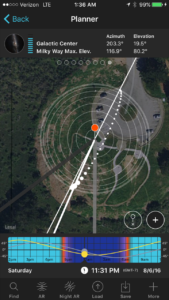
Now I’d like to introduce three smartphone apps that I consider indispensable for travel photography.  First, there’s Photo Pills, an app that incorporates several essential tools into one package.  I use Photo Pills for planning shots where I need to know how to get all the elements, including location, date, and time of day, to come together.  For example, during the Perseid Meteor Shower, I wanted to find a dark sky location with a nice foreground and a view toward the galactic core of our Milky Way.  This way, I could capture images including the meteor shower, the Milky Way, and the pretty landscape in the foreground.  I had a location in mind, a beautiful spot where there isn’t too much light pollution and with a gorgeous view over a reservoir and the Santa Cruz Mountains.  The Planner tool in Photo Pills allowed me to visualize the foreground as viewed by my phone’s camera, superimposed against the Milky Way as it would appear on different days and times of day.  I planned the shot for a certain time on each of several consecutive days, confirmed that the Milky Way would be rising in the desired direction and that the nearly full moon would have already set, and then waited for clear weather.  The first night of the meteor shower was cloudy, but the second night was the charm, and I was able to capture this striking image.
Using the Photo Pills app on my smartphone, I was able to plan in advance for a location, date, and time that would maximize the chances of capturing the Perseid Meteor Shower and Milky Way over the lovely Crystal Springs Reservoir.  Buy this photo

Here’s a screenshot of the Planner tool in Photo Pills that I used to prepare for this shoot.

img_3452

The Photo Pills app has a number of tools to help plan and execute your shots.

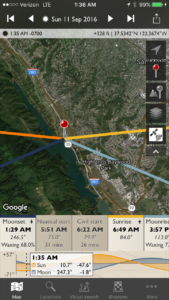
Another useful app for planning the best locations, dates, and times for your shoots is TPE (The Photographer’s Ephemeris).  I find this tool to be especially helpful for visualizing the path of the sun and moon across the field of view for any location I select.  This app is very powerful, and I have only scratched the surface of what it can do to predict and prepare for photo opportunities.

img_3453

The Photographer’s Ephemeris (TPE) is a powerful tool for planning any outdoor photo shoots.

A final app I will mention here is called Easy Release.  Sometimes (read this post for details about model releases), we need a model release when a person or several people are clearly identifiable in a photo.  I know some photographers who carry hardcopy model releases with them wherever they travel, but I find this to be cumbersome and impractical when on the road shooting.  Instead, I use Easy Release on my phone, so I’m always ready to quickly prepare a release for a new friend to sign when they appear in my images.  Even though the app has the ability to translate the text of the release into several languages, there are situations in which it isn’t reasonable to try to explain to a local person what’s in the release and why it’s required.  Furthermore, I consider it to be exploitative if the person can’t reasonably be expected to understand what’s in the document or why they should be signing it.  But there are times when having immediate access to a model release that can be prepared, signed, and stored right on my phone is a big advantage.

img_3454

Easy Release is a convenient tool for creating, signing, sharing, and storing model releases when a person is clearly identifiable in photos.

With proper planning using readily available resources and various apps including the ones I’ve presented here, we can be better prepared to maximize our chances of capturing memorable images.  Happy shooting, and remember that luck favors the prepared!

Do you have a favorite tool you use to plan for your photo adventures?  How have you used this tool to get your shot?  Please share your experiences here.

Want to read more posts about tools for planning your travel photography?  Find them all here: Posts on Planning.

Focus on Dance Brigade’s “Gracias a la Vida: Love in a Bitter Time” [Encore Publication]: Creative approaches to shooting inspiring performances

Recently, I had the privilege of shooting the dress rehearsal for a new show highlighting 40 years of activism through the arts, presented by San Francisco feminist and multi-cultural dance company, Dance Brigade.  Their work was extremely powerful and moving.  Not only was it artistically and technically astonishing, but the show was truly inspiring as a testament to the power of artists fighting for social justice.  In the current era we need this power to be wielded widely and wisely to balance the widespread injustice all around us.

When shooting work as inspiring as this, I often choose less traditional and more creative approaches to presenting my images.  In short, the medium should match the message, so when the message is as powerful as Dance Brigade’s performance, I believe the medium should rise to the occasion.  So, in addition to making some traditional documentary images shot looking directly toward the performers with an eye toward capturing the obvious, I also strove to capture some different and unusual perspectives on the performance.  I present some of them in the post with short descriptions of my intent for each image.

The usual rules for shooting a live indoor performance still apply.  Gain permission to shoot in advance directly from the show’s producer.  Use a fast lens and high ISO setting so as to be able to preserve a fast shutter speed to freeze action while still avoiding use of flash, which distracts performers and crew.  Turn off your LCD display and check your images only when there’s a break in the action.  Use the quietest shutter mode your camera supports.  And never use a tripod or monopod unless you have explicit permission from the producer.

Wait for the telling moment: There are instants during live performances that distill the overall message down to its essence.  Seek those moments.  Buy this photo

Tell a story: Just as a good performance is designed to reveal key messages to the audience at the appropriate time, so should the photographer capture images that disclose the underlying narrative.  This image of the climax from a piece on the plight of refugees captures the essence of the story.  Buy this photo

Find an unusual perspective: When shooting behind-the-scenes such as at a dress rehearsal, you have the opportunity to find just the right combination of vantage point and lens to make your images really pop.  This image was made from the lip of the stage.  I had to lean forward across the front of the stage and shoot upward.  I love this shot because it captures the artist from her eye level just at a decisive moment in the drama.  Buy this photo

Document the power of the performance: This piece started quietly and worked up slowly to a frenzy of pent-up anger and activism.  I found the best vantage point and waited for the perfect moment.  Buy this photo

Know when to break the basic rules of composition: Sure, most of the time you want to avoid cutting a performer’s head off.  But I saw the latent energy inherent in the unorthodox framing of this image.  By shooting from the static artist’s level and capturing only part of the jumping artist’s body, I transformed the image into a bolder statement that supported the message of the piece.  Buy this photo

Gain perspective: Not every image needs to include the whole environment.  Sometimes it’s more powerful to capture just the salient part.  Buy this photo

Capture a moment of pure joy: Shoot lots of images so that you can choose the ones that really make an impact.  The bold colors, shallow depth-of-field, and simple composition of this image work to emphasize the dancer’s aura of joyful triumph.  Buy this photo

Use black-and-white: This image cried out for me to convert it to monochrome.  Its raw documentary power and gritty, graphic nature are more compelling in black-and-white.  Buy this photo

Don’t be afraid to use selective focus: It’s okay for certain elements of your subject not to be in sharp focus.  I chose a narrow depth-of-field in order to obtain selective focus on just the performers in the middle of this triumphant circle.  The soft focus on the dancers in the foreground and far background only serve to enhance the dramatic power of the image.  Buy this photo

I hope this essay provides some ideas for how to shoot creative images that amplify the power of your message.  Modern digital photography provides us with so many tools for making images that go beyond the pure documentary function to also enchant our viewers with imagination.  A performance as moving as Dance Brigade’s “Gracias a la Vida: Love in a Bitter Time” deserves more than a straightforward narrative capture.  I tried to make some images that supported their messaging with a creative visual style.  Continue to capture the obvious message in your images, but keep shooting to go beyond the documentary.  Go wild, and see what you can achieve!

How do you go beyond the obvious to capture images that pop?  Please share your ideas here?

Want to read more posts about what to shoot while traveling or near home?  Find them all here: Posts on What to Shoot.


Capturing the Creative Process [Encore Publication]: How to document an artist’s work using your own artistic vision

Capturing images of the performing arts is a specialty of mine, as well as one of my absolute favorite genres of photography.  But as gratifying as I find documenting live performances of dance, music, or theater, there’s a whole higher level of photographic joy available from capturing the artist’s creative process before their work reaches a public audience.  Today’s post focuses on a recent behind-the-scenes shoot that I did for a friend and longtime collaborator, Arina Hunter.

I arranged to shoot her dress rehearsal just before the first of two public performances as part of San Francisco’s SAFEhouse for the Arts RAW (Resident Artist Workshop) program.  Arina was preparing to perform an untitled work-in-progress which was quite complicated technically, so it was fascinating to watch her process of making artistic decisions and readying herself and the technical crew for the evening’s show.

Read on to see some of my favorite images from the rehearsal, accompanied by a few thoughts about my own artistic and technical process that went into the capture of Arina’s work.

All of these images are available for sale on my website.  Just click on any image to view them in the online gallery.

The creative process is about more than just practicing for a performance.  Try to include some wider views depicting the artist’s full environment including equipment, sets, and performance space.

The flip side is that it’s also important to get up-close and to capture the physical work that goes into preparing for a performance.

Shoot plenty of frames to maximize the chances of capturing the “decisive moment” when the artist’s work comes together as an integrated whole.

Typically there are several different moods evoked in a single piece of art.  This image captures a vulnerability and poignancy that informed Arina’s work even as much of her physical performance exudes strength.  Finding the right perspective to convey each mood is key to making successful images.

When post-processing my images, I ask myself how can my own technique best convey the artist’s intention.  For this image I decided a monochrome conversion would best render Arina’s physicality at this precise moment during her process.  Freeing the viewer from the anchor of color perception, a black-and-white image is graphic and timeless and allows us to focus on what is elemental: form, contrast, shadow, and light.  

I shot this image from a low perspective near the ground so as to juxtapose Arina’s body with the projected video image on the wall.  Always look for a different perspectives while shooting that can create compositions to get across your intent.

Another example of perspective: To make this image I climbed on top of a chair and shot down on Arina in her performance space. 

Sometimes the details convey the story better than the whole.  This closeup of Arina’s paint-covered hand framed by colorful canvas makes a powerful summary of her performance piece.

Today’s post has been a bit more conceptual and less technical than most of my posts.  The purpose is to get you thinking about how our own art of photography can be harnessed to capture the creative process of other artists.  The next time you are privileged to get to shoot an artist at work, think about how you can apply elements such as composition, perspective, color, texture, empty space, motion, and stasis to capture compelling images of the artist’s own vision!

Do you have techniques you’ve used to document other artists’ creative process?  Please share your thoughts here.

Want to read other posts about photographic techniques?  Find them all here: Posts about techniques.


News Flash: Google Removes Popular “View Images” Button [Encore Publication]: Why google removed this feature and what it means for photographers

Two days ago, Google rather quietly removed a very popular feature from its search functionality.  As part of a legal settlement with the powerful Getty Images stock photography agency, the search behemoth has agreed to remove the “view images” button that appeared whenever a search result included images.  Clicking on this button would open the image directly in the user’s browser, allowing them to bypass a visit to the website containing the matched image.  Now that word is getting out about this popular feature being removed, the Internet is up in arms, with thousands crying foul and lambasting both companies for this decision.  In today’s post, I focus instead on what this change means for photographers and other intellectual property owners.  And guess what?  It’s a good thing, not a bad thing.

The Web is a mixed bag for photographers.  On the one hand, the Web offers us an instantaneous and inexpensive way for our work to be seen by potentially billions of people around the world.  For professional photographers, the technology allows us to deliver work to clients, share our art, and make new sales with relatively little cost or effort.  On the other hand, the Web also makes it incredibly easy for people to steal our work.  I recently conducted a reverse image search on one of my most popular (and valuable) images, the multiple international-award-winning shot of an alligator with its reflection in the waters of a Louisiana bayou, and found that it currently lives in more than 300 places around the world on the Internet.  A few dozen of those sites are authorized to use my image, such as legitimate news agencies reporting on my having won the awards and certain clients to whom I have licensed the right to use the image, but nearly all of the sites’ publishers are using my work without permission.  In other words, they are thieves.

For photographers, our images represent countless hours of hard work, the application of our talent accrued over a lifetime, considerable financial investment in gear and travel, and for professionals, our livelihood.  The fact that it is convenient and easy to steal our work does not make it ethical or legal to do so.  By removing a search results feature that made theft extremely easy, Google has taken a serious step toward protecting intellectual property rights.

Of course it is still quite easy to grab images off the Web if you have a mind to.  You can click on the “visit page” button in the Google search results, find the image on the website, and right-click on it to save it on your device.  Photographers can make that process a bit harder by adding right-click protection to remind would-be thieves that the image is copyrighted, but there are plenty of ways to get around this protection.

The recent move by Google therefore won’t end the problem of digital image theft overnight, but it’s a good step in the right direction.  Image sharing and legitimate use is preserved, while making things just a tad harder for those who knowingly or unknowingly want to steal other people’s images off the Web.

Google has simultaneously ended the “Search By Image” button that popped up when a user opened an image.  I have mixed feelings about this decision, also a result of the settlement with Getty Images.  While this feature could be used by thieves who want to find un-watermarked copies of photos somewhere on the Web, it’s also very useful for photographers who need to know where our images are appearing around the world.  Fortunately, you can still use this feature simply by dragging the image into the search bar at the top of your browser’s screen.

I hope this post from a working photographer’s perspective will help defuse some of the animus hurled against Google from angry Internet users.  Removing the “View Images” button doesn’t solve all intellectual property theft in one simple move, but it is a reasonable step toward the goal of protecting image copyrights, and that’s a good thing for us photographers and, ultimately, for all users of images.  Because if photographers can’t make a living selling our work, very soon there won’t be any pro-quality images out there.

Do you agree with my viewpoint?  Or do you have a differing opinion?  Please share your comments here!

Want to read my earlier post about what to do if your images are stolen?  Find it here: What to do if your images are stolen.


What I’m Thankful For [Encore Publication]: An opinionated list of my top five photographic blessings

At dinner on the American Thanksgiving holiday each year, the members of my family go around the table sharing our lists of what we’re thankful for.  This is a common tradition, and I find it energizing, comforting, and occasionally challenging to learn from my wife and daughters and any other family and friends gathered for the feast what they consider to be their greatest blessings.  So for this Thanksgiving Day post, I’m going to share a photographic what-I’m-thankful-for list.  Of our many modern photographic blessings, here is one photographer’s very opinionated list of the top five.

Jumping for joy over the brave new world of photography in which we live

  1. Instant image review: Those of us who cut our photographic teeth in the film era became accustomed to waiting for days to see the results of our work.  After shooting a roll of film, we would package it up, mail it to the lab, and receive our transparencies or prints back in a few days.  If we botched the exposure, focus, composition, or any other element of the image, we wouldn’t know until it was too late to recreate the shot.  For travel photographers, event photographers, and photojournalists, this was an especially harsh situation, as those once-in-a-lifetime moments would be lost forever if even a small setting was incorrect.  In today’s digital world, we get to preview each image instantly on our camera’s LCD display as it is captured.  If any aspect of the image is less than ideal, we can immediately retake it.  The built-in real-time histogram featured in many advanced cameras makes the instantaneous image review even more powerful, as we can see at a glance whether the exposure is in the expected range.  It’s so easy to take this capability to instantly review our images for granted, and many modern photographers do abuse it (pros call it “chimping” when a photographer constantly looks up and down at the LCD screen while shooting), but I am grateful every day to have this feature available.
  2. Modern full-frame image sensors: If you’d have told me when I was a kid that 40 years later we’d be able to instantly choose any sensitivity for our shooting needs from ISO 50 through ISO 25,000 and even higher, I’d have asked what you were smoking.  Same with the concept of a camera that can capture many times the resolution of what was possible on the most fine-grained 35mm films.  Ditto for the idea that our camera could focus for us, even under low-light situations with fast-moving action, faster and more accurately than we could achieve focus ourselves.  Or that we could just hold down our finger on the shutter release and the camera would shoot 10 or more frames per second with almost no limit to the number of images that could be stored.  All of this would have sounded like science fiction, yet modern full-frame image sensors provide all of these capabilities and much more.  My Nikon D810 bodies are so good at capturing images in nearly any genre of photography that I can’t imagine anything working better.  But of course every two to three years a whole new generation of sensors is released that does everything better still.
  3. The Nikon 85mm f/1.8 lens: We have so many incredible optics for which to be thankful that it’s hard to single out just one.  But there is one piece of glass that makes my heart sing with joy every day.  It’s inexpensive, small, light, fast as lightning, sharp as a razor blade, and renders accurate colors and glorious bokeh.  I do about 80% of my shooting with prime lenses, and probably two-thirds of that is with this one lens.  And that lens is the Nikon 85mm f/1.8 lens.  It’s a classic for making portraits but also works great for sports, wildlife, and even many landscapes.  If only everything else in life were so satisfying!
  4. Lightroom: Even with today’s amazing camera and lens capabilities, few images emerge perfectly from the camera.  Most images need some tender loving care during post-processing, and for my workflow needs, Adobe’s Lightroom software is perfect.  It’s great at importing, culling, and organizing huge batches of photos, and it’s editing features are all I need for more than 90% of my images.  Lightroom “thinks” the way a professional or enthusiast photographer thinks, and it’s quite intuitive to apply presets and/or automated batch tools to develop large numbers of images at once.  Thinking back on the old days of post-processing photos in a darkroom, I find that the digital counterpart (called “Lightroom” for good reason!) is so much faster, more powerful, and more gratifying.
  5. Instantaneous global sharing: Once our images are looking just the way we want them to, it’s time to share them with others.  Not long ago, this was a burdensome task.  It cost a lot of time, money, and aggravation to distribute just a few images with just a few people.  Now, with digital image capture, the Internet to distribute the images, and mobile devices with social media to view them, the world is at our fingertips.  There is a downside to this ubiquitous image sharing: we working professional photographers see the value of our work eroded by the flood of photos cascading around the world 24 hours a day; but in net this is a profoundly powerful and valuable asset to the art and business of photography.

Almost anywhere in the world we are immersed in a sea of images, making sharing them instantaneous, cheap, and far-reaching

There’s never been a better time to be a photographer (at least from an image capture and sharing standpoint; don’t get me started on the financial aspects), and in this exponentially evolving digital, interconnected world, it’s only going to keep getting better.

What are you thankful for in this brave new world of photographic goodies?  Please share your thoughts here.

Want to read more posts about photographic gear?  Find them all here: Posts about gear.


Capturing the Creative Process: How to document an artist’s work using your own artistic vision

Capturing images of the performing arts is a specialty of mine, as well as one of my absolute favorite genres of photography.  But as gratifying as I find documenting live performances of dance, music, or theater, there’s a whole higher level of photographic joy available from capturing the artist’s creative process before their work reaches a public audience.  Today’s post focuses on a recent behind-the-scenes shoot that I did for a friend and longtime collaborator, Arina Hunter.

I arranged to shoot her dress rehearsal just before the first of two public performances as part of San Francisco’s SAFEhouse for the Arts RAW (Resident Artist Workshop) program.  Arina was preparing to perform an untitled work-in-progress which was quite complicated technically, so it was fascinating to watch her process of making artistic decisions and readying herself and the technical crew for the evening’s show.

Read on to see some of my favorite images from the rehearsal, accompanied by a few thoughts about my own artistic and technical process that went into the capture of Arina’s work.

All of these images are available for sale on my website.  Just click on any image to view them in the online gallery.

The creative process is about more than just practicing for a performance.  Try to include some wider views depicting the artist’s full environment including equipment, sets, and performance space.

The flip side is that it’s also important to get up-close and to capture the physical work that goes into preparing for a performance.

Shoot plenty of frames to maximize the chances of capturing the “decisive moment” when the artist’s work comes together as an integrated whole.

Typically there are several different moods evoked in a single piece of art.  This image captures a vulnerability and poignancy that informed Arina’s work even as much of her physical performance exudes strength.  Finding the right perspective to convey each mood is key to making successful images.

When post-processing my images, I ask myself how can my own technique best convey the artist’s intention.  For this image I decided a monochrome conversion would best render Arina’s physicality at this precise moment during her process.  Freeing the viewer from the anchor of color perception, a black-and-white image is graphic and timeless and allows us to focus on what is elemental: form, contrast, shadow, and light.  

I shot this image from a low perspective near the ground so as to juxtapose Arina’s body with the projected video image on the wall.  Always look for a different perspectives while shooting that can create compositions to get across your intent.

Another example of perspective: To make this image I climbed on top of a chair and shot down on Arina in her performance space. 

Sometimes the details convey the story better than the whole.  This closeup of Arina’s paint-covered hand framed by colorful canvas makes a powerful summary of her performance piece.

Today’s post has been a bit more conceptual and less technical than most of my posts.  The purpose is to get you thinking about how our own art of photography can be harnessed to capture the creative process of other artists.  The next time you are privileged to get to shoot an artist at work, think about how you can apply elements such as composition, perspective, color, texture, empty space, motion, and stasis to capture compelling images of the artist’s own vision!

Do you have techniques you’ve used to document other artists’ creative process?  Please share your thoughts here.

Want to read other posts about photographic techniques?  Find them all here: Posts about techniques.


Focus on Yosemite National Park [Encore Publication]: A photographer’s dream, Yosemite offers so much more than the postcard views

Those of us who live in the San Francisco Bay Area can count many blessings, but one I am most thankful for is our fairly close proximity to Yosemite National Park.  The second oldest national park in the US, Yosemite is a photographer’s dream.  Since the days when Ansel Adams helped make the park famous through his masterful landscape photography, shutterbugs of all stripes have been flocking there to try to capture some of its indescribable beauty.  Most of us will never be an Ansel Adams, but that doesn’t stop me from returning to Yosemite at least once per year to give it my best shot, as it were.

Without doubt, there are many iconic views in the park that are relatively easy for even novice photographers to render.  There is majesty in the panorama over Yosemite Valley as seen from the famous Tunnel View lookout.  One doesn’t even have to venture off the main park road to shoot a nice image of Half Dome or El Capitan.  But Yosemite offers so much more to the photographer who’s willing to look a bit more closely, to hike a little instead of jumping out of a car to shoot, or to come to a spot at unusual times, including the middle of the night.

In this post, I’ll share a few images I made in Yosemite National Park over the past year, but none of them will be a postcard-type shot that you’ve seen 1000 times before.  And we’ll talk a bit about how to find and capture these less discovered views.

While hiking in the Tuolumne Meadows area, 5000 feet above Yosemite Valley, we were caught in a freak hailstorm at the remote Dog Lake.  Instead of throwing a rain cover over my gear and running for shelter like a normal person would do, I set up my kit and started shooting.  This image plays off the contrasts between the peaceful and violent sides of nature and between the light and the shade.  It is a composite of several different shots made at different exposures, put together in Lightroom’s HDR (high dynamic range) merging tool.

Yosemite offers unusual and dramatic views to those willing to get away from the roads and brave some harsher conditions.  Buy this photo

Another less-visited attraction in the park is the wonderful Chilnualna Falls.  The lower waterfall is actually quite an easy hike from the parking area at the trailhead, and its little swimming hole makes for a refreshing break on a hot summer’s day.  Here’s a shot of my younger daughter enjoying a dip in the swimming hole just under the falls.  To blur the water, I used a slow shutter speed, which could only be achieved in the harsh mid-day light by attaching neutral-density filters to the lens.  Neutral-density (ND) filters are an essential accessory for the landscape photographer, because they block most of the available light from reaching the camera’s sensor, allowing you to use a slower shutter speed to blur motion and/or a wider aperture to throw the background out of focus.

These reduce the amount of light that reaches the camera’s sensor, so you can use slower shutter speeds to blur motion, or so you can use a wider aperture to get a shallow depth-of-field, even in bright sunlight.

A neutral-density filter allows a nicely blurred shot of the waterfall at Chilnualna Falls.  Buy this photo

Another lovely hike in the high country of Tuolumne Meadows is Cathedral Lakes.  On our way back from these pristine and remote lakes, we passed this granite rock dome.  I used a polarizing filter on a wide-angle lens to bring out the details on the surface of the rock and to lend more drama to the sky.  Then, in post-processing, I converted the image to black-and-white to emphasize the remarkable texture of the granite slab’s surface.  For more discussion about converting images to black-and-white, take a look at my earlier post: B&W Photography post.

Using a polarizing filter can darken and add drama to skies, reduce unwanted reflections, and render stunning detail on shiny surfaces.  Converting an image to black-and-white can bring out the textures and patterns that may be less prominent when viewed in a color image.  Buy this photo

Just because a place is glorious in its own right doesn’t mean we can’t include people in our photos.  Putting humans in a landscape adds a personal touch, provides a sense of scale, and often tells a more compelling story than would an image of the same place without people.  Here I’ve included my daughters in a landscape from the incomparable summit of Sentinel Dome.

Including people in landscapes layers a human narrative on top of the natural story.  I like the added color, and humor, from the addition of my daughters in their college logo hats.  I’ve chosen a wide aperture to soften the focus on the lovely background.  Buy this photo

You don’t have to stop shooting when the sun sets.  Some of the most wonderful images of Yosemite are made after dark.  I came to this spot not far from the edge of the meadow in Yosemite Valley, and right on the bank of the Merced River, quite late at night when the sky was very dark.  I set up my camera and wide-angle lens on a tripod and made a 25-second exposure at a high sensitivity (ISO) setting.  The resulting image shows the spectacle of the Milky Way arched above the terrestrial grandeur of Half Dome and other Yosemite landforms.  For more discussion of capturing the Milky Way, visit this post: Milky Way photography post.

A favorite image of mine: The Milky Way above Half Dome.  Note that not every landscape image needs to be in “landscape orientation”.  Buy this photo

Next time you are fortunate enough to visit Yosemite National Park, try to discover some new places, visit favorite places during less-visited times of the day (or night), and include some people for a human component to the story.  Your images will stand out from the millions of others made in this glorious park!

Do you have a favorite photographic experience from Yosemite to share?  Please leave a comment to let us know.

Want to see more posts on great travel photography destinations?  See them all here: http://www.to-travel-hopefully.com/category/destinations/.


Mardi Gras SF 2018 [Encore Publication]: A case study on shooting action in low light

San Francisco has been celebrating Carnaval for 40 years, and for the past 5 years I’ve been documenting this wonderful event.  The anniversary season officially kicked off last night with San Francisco’s take on Mardi Gras.  I covered the small parade through SF’s historic Mission District and also the performances of several comparsas (like krewes or samba schools) at one of the event’s venues.  Today’s post showcases some of my favorite images from this year’s Mardi Gras while also serving as a case study for shooting fast action in extremely low light conditions.

Taking the approach of “if you can’t beat them, join them,” remember that when shooting action in low light it is okay occasionally to intentionally allow some motion blur to emphasize the movement.  Here I achieved a soft painterly effect by choosing a slower shutter speed to capture this image of a young dancer mustering for the parade.

The use of flash is required for much low-light action photography, but that doesn’t mean your images have to be harsh or unnatural looking.  A few hints: 1) Get the flash off your camera using a flash cord or remote control; 2) Use balanced fill flash instead of automatic flash for a more realistic look; 3) Dial down the flash’s power by using flash exposure compensation (I use -1 stop most of the time); 4) These settings often will require that you use a high ISO setting and a fast lens.

Use a fast prime lens to achieve a fast shutter speed along with a relatively shallow aperture to freeze and isolate your subject.  Most of these images were made with a 50mm f/1.4 lens.

In post-processing your images, consider these tips: 1) Apply some noise reduction to mitigate the digital noise associated with high-ISO shooting; 2) Adjust the white balance to render the colors you remember from the shoot (always shoot in RAW mode if possible to allow setting the white balance during post-processing); 3) Apply a touch of post-crop vignetting to emphasize your subject and reduce background clutter.

For group shots, try to find an uncluttered background and pose everyone as tightly as possible so that your fill flash will illuminate them evenly.  Don’t use a wide-angle lens for group shots!  Sure, doing so will make it easier to fit in all the subjects, but it also provides a very unflattering perspective for most people.  Here I shot with a 50mm “normal” lens and moved back to fit in the entire group.

Portraits work very well using balanced fill-flash techniques.  Be sure to find an uncluttered background and get the flash unit off the camera.  Here I bounced the flash off the awning of a building to achieve a soft effect relatively unencumbered by shadows.

By applying some of these techniques, you can capture fast-moving action even under extremely low-light conditions and still achieve realistic looking and flattering results.

Do you have suggestions for shooting action in low light?  Please share your thoughts here.

Want to read more posts about photographic techniques?  Find them all here: Posts about techniques.  And remember that all the images featured in this post as well as thousands more are available for viewing or purchase on my website–just click on any photo to view it in more detail.

Join Me on a Photography Tour of Mongolia: Capture unique images of a fast-vanishing nomadic lifestyle in this rarely seen part of the world

Dear Readers,

Please join me on a one-of-a-kind photography adventure through Mongolia from September 11-28, 2018.  This is a small group tour and is likely to fill quickly.


Wild and untamed, Mongolia is a deeply spiritual land of nomadic cultures and dreamy landscapes of snowcapped mountains, crystalline lakes, and great swathes of grassy plains and ancient desert. Even today, Mongolia evokes a time when Genghis Khan and his warrior horsemen thundered across the steppe to establish the largest land empire the world has ever known. Discover Mongolia’s diverse land and people, from the bustle of Ulaanbaatar and alpine beauty of Khovsgol Lake to the vast expanse of the Gobi Desert. Meet with nomadic herding families, learn about ancient shamanistic beliefs, ride a camel in the desert dunes, and discover why Mongolia is known as the “Land of Blue Sky” during stays in authentic ger tents—just as modern-day nomads and their ancestors have done for centuries. Travel to Mongolia, a pristine land that time forgot, for an adventure you’ll treasure forever.

Join our small group of photography enthusiasts and experience the thrill of capturing the full range of Mongolia’s spectacular beauty. Mongolia is a dream destination for travel photographers, offering breathtaking scenery, unique wildlife, and fascinating cultural encounters. We’ve planned this itinerary to provide ample opportunities to capture unforgettable images that you won’t find in travel brochures and on postcards.

Award-winning professional travel photographer Kyle Adler will be shooting alongside tour participants and will provide personalized in-the-field instruction. During our optional informal workshops, we’ll review our recent images, plan our shot list for upcoming locations, and cover techniques to make the best images possible. Topics will be tailored to the group’s interests and may cover any aspects of travel photography from shot planning to capture technique, and on to post-processing and image sharing. Unlike most photography tours, we will place a special emphasis on learning to use the camera as a bridge to enhanced understanding of the land and people we visit. Photographers of any level will see their images improve, and non-photographer friends and family are also most welcome to join this tour. You can make memorable images using whatever camera gear you wish to bring; it is not necessary to invest in specialized gear.

Visit the Overseas Adventure Travel web page to  learn more about this photography adventure: Photography Adventure in Mongolia

Call Overseas Adventure Travel toll-free at 1-800-353-6262 and press 3 for more details; Refer to Group Booking Code (G8-28085)

If You Can’t Be with The Camera You Love [Encore Publication]: How to make the best of it when you don’t have ideal kit with you

There’s an old adage that goes, “The best camera is the one you have with you.”  That is never more true than for travel photography.  As travelers, we have to compromise regarding what gear we pack for a whole trip, and then we have to compromise again with respect to what equipment we can pack on a particular day’s outing during the trip.  If a flight is involved, we’re often obligated to leave much of our gear at home so as to avoid having to check our precious photography equipment.  If a good deal of hiking, biking, or travel via public transportation is required, we may have to leave bulky or heavy items in the hotel room for the day.

Fortunately, it’s never been easier to ensure we always have at least some backup solution to keep shooting even when a key camera, lens, filter, or tripod has to be left behind.  The smartphone that nearly everyone carries with them at all times likely has a pretty darn good camera attached to it.  My Apple iPhone 6s, for example, comes with a 12 MP camera, incorporating a decent if small sensor and a tolerable quality and moderately fast (f/2.2) lens.  Even the smaller “selfie” camera has a 5 MP sensor.

No one will confuse the images made using this camera phone with those made using my professional DSLR camera and collection of lenses, but in a pinch I can get acceptable quality shots with just the phone’s camera.  The trick is understanding how to use your smartphone’s camera, or your small point-and-shoot camera, in the right way to capture the images, and then to post-process the images in such a way as to overcome the compromises built into the camera.

Just yesterday I found myself on a family day trip to the annual Scottish Highland Gathering and Games without my professional camera gear.  I made the best of things and shot all day with just my camera’s phone.  I’m fairly pleased with the resulting images, even though of course they would have been better had I had access to my regular camera and a few choice lenses and accessories.  Here are a few of my images along with some tips on how to get the best out of a not-so-great camera.

First of all, learn how to control your phone’s camera manually so that you can choose what part of the image you want to be in focus and what part of the image you want to drive the exposure.  Nearly all modern phone’s cameras allow you to touch the screen to select where on the image you want to set the focus and exposure.  In this photo of a Scottish traditional music performance, I set the focus point on the fiddler to ensure sharp focus on the musicians.  Then I adjusted the exposure by moving the vertical slider upward, in order to add some brightness to the image and avoid underexposing the backlit performers.

Touch your smartphone camera’s screen to select the focus point, and then move the exposure slider up or down to adjust the exposure separately from the focus point.  Buy this photo on my website

Better yet, take full manual control over your phone’s camera by installing an app.  There are good free and inexpensive apps for both iOS and Android.  The one I use for iOS is called “Manual” and is available on the Apple App Store: Manual app.  With such an app installed on your camera, you can specify manually exactly what settings you want to use for the focus point, aperture, shutter speed, ISO, flash, etc.  This level of control was essential for a shot like the one below.  The tossin’ of the caber, a “heavy athletics” event in which the contestants throw a 75-pound tree trunk as far as possible, requires a fast shutter speed in order to freeze the rapid action.

Note: Since I first wrote this post, I have started using a different iOS app to take manual control over my phone’s camera.  It’s called “ProCam 4” and it’s quite a bit more sophisticated, but as easy to use, as the “Manual” app.  You can purchase it on the Apple iTunes Store here: ProCam 4 App.

Using the “Manual” app I was able to focus on the athlete and choose a fast shutter speed to freeze the rapidly moving caber.   Buy this photo on my website

To capture this action shot of an indoor sheepdog trial, I had to set a fast shutter speed and increase the camera sensor’s sensitivity (ISO) to accommodate the quick action and the low-light setting.  Again, the Manual app allowed for this flexibility.  I also cropped the image during post-processing because the phone’s camera does not have a long enough focal length lens to zoom in closely on the subject.

Both manual selection of the ISO and shutter speed and cropping during post-processing are required to get a decent shot of action like this sheepdog trial.  Buy this photo on my website

To capture this image of a girl teaching young children how to dance around the maypole, I had to use all the elements we’ve been discussing here.  I used manual settings to choose a focus and exposure that were correct for this subject, forced the camera’s flash to fire to try to even out the harsh shadows across the girl’s face, and employed cropping and lighting adjustments during post-processing to achieve a pleasing composition.

Bringing it all together: To make this image of the maypole celebration, I manually selected the focus, exposure, and flash, and then cropped and adjusted exposure during post-processing.  Buy this photo on my website

Next time you can’t or just don’t have the best equipment with you, use the tips we’ve covered here to make the best of a challenging situation.

When did you have to make do with less than ideal gear for a shoot?  How did you make the best of it?  Do you have tips or tricks you can add?  Please contribute your thoughts using the comment box at the end of this post.

Want to read more post about photographic gear?  Find them all here: Posts on Gear.

Mardi Gras SF 2018 [Encore Publication]: A case study on shooting action in low light

San Francisco has been celebrating Carnaval for 40 years, and for the past 5 years I’ve been documenting this wonderful event.  The anniversary season officially kicked off last night with San Francisco’s take on Mardi Gras.  I covered the small parade through SF’s historic Mission District and also the performances of several comparsas (like krewes or samba schools) at one of the event’s venues.  Today’s post showcases some of my favorite images from this year’s Mardi Gras while also serving as a case study for shooting fast action in extremely low light conditions.

Taking the approach of “if you can’t beat them, join them,” remember that when shooting action in low light it is okay occasionally to intentionally allow some motion blur to emphasize the movement.  Here I achieved a soft painterly effect by choosing a slower shutter speed to capture this image of a young dancer mustering for the parade.

The use of flash is required for much low-light action photography, but that doesn’t mean your images have to be harsh or unnatural looking.  A few hints: 1) Get the flash off your camera using a flash cord or remote control; 2) Use balanced fill flash instead of automatic flash for a more realistic look; 3) Dial down the flash’s power by using flash exposure compensation (I use -1 stop most of the time); 4) These settings often will require that you use a high ISO setting and a fast lens.

Use a fast prime lens to achieve a fast shutter speed along with a relatively shallow aperture to freeze and isolate your subject.  Most of these images were made with a 50mm f/1.4 lens.

In post-processing your images, consider these tips: 1) Apply some noise reduction to mitigate the digital noise associated with high-ISO shooting; 2) Adjust the white balance to render the colors you remember from the shoot (always shoot in RAW mode if possible to allow setting the white balance during post-processing); 3) Apply a touch of post-crop vignetting to emphasize your subject and reduce background clutter.

For group shots, try to find an uncluttered background and pose everyone as tightly as possible so that your fill flash will illuminate them evenly.  Don’t use a wide-angle lens for group shots!  Sure, doing so will make it easier to fit in all the subjects, but it also provides a very unflattering perspective for most people.  Here I shot with a 50mm “normal” lens and moved back to fit in the entire group.

Portraits work very well using balanced fill-flash techniques.  Be sure to find an uncluttered background and get the flash unit off the camera.  Here I bounced the flash off the awning of a building to achieve a soft effect relatively unencumbered by shadows.

By applying some of these techniques, you can capture fast-moving action even under extremely low-light conditions and still achieve realistic looking and flattering results.

Do you have suggestions for shooting action in low light?  Please share your thoughts here.

Want to read more posts about photographic techniques?  Find them all here: Posts about techniques.  And remember that all the images featured in this post as well as thousands more are available for viewing or purchase on my website–just click on any photo to view it in more detail.

New Year’s Resolutions [Encore Publication]: My opinionated list of the top 5 promises all travel photographers should make and keep

Personally, I’m not a big fan of new year’s resolutions.  Common sense dictates that if we really want to make change in our lives, we should resolve to take specific steps toward that change every day.  Promises we make on December 31 each year will most likely be broken by January 15.  That’s certainly what I’ve observed over many years on the running trails and gyms where I’ve run or worked out daily.  A huge surge in attendance begins on January 1 and dissipates within about two weeks.

So I waited a couple of weeks to share my thoughts on what we travel photographers should resolve to do differently.  Since these aren’t technically “new year’s resolutions,” it’s my hope that these practices will stick.

  1. Book that once-in-a-lifetime trip now:
    Visit that exotic destination you’ve always wanted to see!  Buy this photo
    That travel photography “bucket list” needs to be emptied before you kick the proverbial bucket.  I know too many people who always found excuses to put off taking the trips they most desired, until it became too late for them.  The kids are too young, my job is too demanding right now, I can’t afford the cost.  I’ve made these excuses, too.  But the one thing we can’t live a full life without and can’t ever lose once we’ve attained it is experience.  Every trip I’ve taken helped me grow as a person and as a photographer, and also helped me grow closer to my family and other travel companions.  So book that trip today and go this year.  You won’t regret it.
  2. Just get out there and shoot:
    USAThere are countless exciting subjects for your photography within a few miles of your home.  Buy this photo
    Even professional travel photographers can’t be on a lengthy shoot in an exotic part of the globe all the time.  So, book those once (or a few times) in a lifetime trips as soon as feasible, but in the meantime find some wonderful local attractions where you can hone your craft by making compelling images.  I love to shoot little-known local cultural events such as street fairs and performances of dance, theater, and music.  It’s also a great pleasure to find scenic spots near home where we can make some striking landscape images that haven’t been shot thousands of times before.  Remember, you’re the local expert near your home, so seek out frequent opportunities to shoot in your own community.
  3.  Learn to use your camera as a tool to bridge the gap between your culture and the culture of the land you’re visiting:
    CubaPhotography can bring us closer to the people we meet on our journeys.  Buy this photo
    Instead of letting your photography separate you from the people you’ve come to learn from, resolve to turn your image-making into an opportunity to meet more people and get to know them more deeply.  Check out my pillar post on how to do this: Post on Photography as a Cultural Bridging Tool.
  4. Approach wildlife with respect:
    The more we learn about and respect the fauna we encounter during our travels, the healthier they will emerge from the experience (and the better our images will turn out).  Buy this photo
    A photo safari is a life-changing experience and should be on every travel photographer’s list.  But just as our cameras can be used either to alienate local people or to bond with them, so can photographing animals be used to harm them or to respect and help preserve them.  Read this post for more detailed tips (Post on Wildlife Photography), but in the meantime I will summarize by emphasizing the importance of prioritizing the animal’s welfare ahead of our desire to get an amazing shot of it.  Getting too close to wildlife will stress the animal and could even cause it to become lunch (or cause a predator to starve by losing its meal).  The more we get to know a species’ behavior before encountering it in the wild, the better our images will be and the healthier the animal will emerge from the encounter.
  5. Continually improve technique:
    I strive to hone my technique with every shoot.  Buy this photo
    There are more important elements in photography than technique, but a mastery of technique does help us make the images we want, so I always work to improve mine.  If you haven’t already gained the confidence to shoot in manual mode, start learning now.  Remember that while cameras have become very smart, they aren’t artists and they can’t know what the photographer is trying to achieve, so learn to take control of your camera’s settings today.  Here’s a short post listing five key techniques that will help your images stand out: Post on Top Five photography “hacks”.

So, resolve to take that trip of a lifetime, shoot locally while you’re waiting for it, learn to use your camera as a tool to interact beneficially with the people and the wildlife you meet during your travels, and work to hone your technique.  I’ll be doing the same!  Happy trails in 2017.

What do you resolve to do in 2017?  Please share your thoughts here.

Join Me on a Photography Tour of Mongolia: Capture unique images of a fast-vanishing nomadic lifestyle in this rarely seen part of the world

Dear Readers,

Please join me on a one-of-a-kind photography adventure through Mongolia from September 11-28, 2018.  This is a small group tour and is likely to fill quickly.


Wild and untamed, Mongolia is a deeply spiritual land of nomadic cultures and dreamy landscapes of snowcapped mountains, crystalline lakes, and great swathes of grassy plains and ancient desert. Even today, Mongolia evokes a time when Genghis Khan and his warrior horsemen thundered across the steppe to establish the largest land empire the world has ever known. Discover Mongolia’s diverse land and people, from the bustle of Ulaanbaatar and alpine beauty of Khovsgol Lake to the vast expanse of the Gobi Desert. Meet with nomadic herding families, learn about ancient shamanistic beliefs, ride a camel in the desert dunes, and discover why Mongolia is known as the “Land of Blue Sky” during stays in authentic ger tents—just as modern-day nomads and their ancestors have done for centuries. Travel to Mongolia, a pristine land that time forgot, for an adventure you’ll treasure forever.

Join our small group of photography enthusiasts and experience the thrill of capturing the full range of Mongolia’s spectacular beauty. Mongolia is a dream destination for travel photographers, offering breathtaking scenery, unique wildlife, and fascinating cultural encounters. We’ve planned this itinerary to provide ample opportunities to capture unforgettable images that you won’t find in travel brochures and on postcards.

Award-winning professional travel photographer Kyle Adler will be shooting alongside tour participants and will provide personalized in-the-field instruction. During our optional informal workshops, we’ll review our recent images, plan our shot list for upcoming locations, and cover techniques to make the best images possible. Topics will be tailored to the group’s interests and may cover any aspects of travel photography from shot planning to capture technique, and on to post-processing and image sharing. Unlike most photography tours, we will place a special emphasis on learning to use the camera as a bridge to enhanced understanding of the land and people we visit. Photographers of any level will see their images improve, and non-photographer friends and family are also most welcome to join this tour. You can make memorable images using whatever camera gear you wish to bring; it is not necessary to invest in specialized gear.

Visit the Overseas Adventure Travel web page to  learn more about this photography adventure: Photography Adventure in Mongolia

Call Overseas Adventure Travel toll-free at 1-800-353-6262 and press 3 for more details; Refer to Group Booking Code (G8-28085)

Total Eclipse of the Heart [Encore Publication]: Techniques for photographing solar eclipses

Dear Readers:

With the Great American Eclipse coming up in just a couple of weeks (it’s on August 21, 2017), I am republishing this popular post on how to shoot a total solar eclipse.  If you have not yet booked your trip to a spot along the path of totality, now is the time to do it!

Kyle

Prof. Jay Pasachoff and his student set up scientific gear for observing the total solar eclipse in Svalbard in 2015.  Buy this photo

If there’s a more thrilling experience anywhere on our planet than observing a total solar eclipse, I’ve not yet found it.  The experience of observing the moon slowly move in front of the sun, obscuring our view of the sun one nibble at a time until day turns into night, the temperature drops, the stars come out in the middle of the day, and the delicate corona of the sun is exposed, is like nothing else we earthlings can feel.  An eclipse is a singular event, each a bit different from any other that has ever occurred, and an exclusive event that often can be observed only from a narrow swatch of land and in very remote corners of the planet.  I’ve stood in the umbra (shadow) of the moon during three total solar eclipses thus far in my life: first in Virginia Beach in the USA when I was 7 years old, then in the mountains above Anji in China in 2009, and most recently in 2015 in Svalbard well above the Arctic Circle.  I plan to be in Salem, Oregon in the USA on August 21, 2017 when the next total solar eclipse occurs.  These events are truly life-changing, and once you’ve experienced an eclipse you will want to seek out others.

Photographing an eclipse takes all of the normal challenges of travel photography and throws a few special ones into the mix.  To start with, an eclipse can take place anywhere on the planet, and often the best location from which to view one is very remote with little or no travel infrastructure.  The eclipse I experienced in 2015 in Longyearbyen, high in the Arctic on the island of Svalbard, was a transformative event, but the extreme cold coupled with the lack of infrastructure made getting there and photographing the eclipse a special challenge.  And of course, during an eclipse the already challenging conditions are stressed even further due to the tremendous crush of visitors who rush in from all over the world to try to view the solar event.

I recommend you travel with an expert in managing the complicated logistics required to stage a successful eclipse trip.  I always go with A Classic Tours Collection (https://aclassictour.com/solar-eclipse-tours/).  Run by travel logistics guru Mark Sood and with scientific consulting from Professor Jay Pasachoff, a world expert in eclipses and the human being who has stood in the shadow of the moon more times than any other, this company has delivered an unprecedented track record of successful eclipse trips since 1980.

Special challenges in photographing a total solar eclipse, like this one in Svalbard in 2015, include remoteness, lack of infrastructure, extreme conditions, the risk of poor weather, and the need for specialized photographic gear.  Go with an expert or risk missing the action.  Buy this photo

Assuming you are able to get all the right gear to the best possible location to observe the eclipse, and then the weather cooperates, the actual technique required to capture remarkable images of this phenomenal event is fairly straightforward.  Here’s what you need to do:

Gather the right gear.  You will need at least one (and I prefer to have two) DSLR or mirrorless ILC camera bodies with a long telephoto lens or two.  I use a Nikon D810 with a Sigma 150-500mm super-telephoto zoom lens.  For each lens you will need a specialized solar filter to block 99.999% of the sun’s light to enable you to shoot the sun safely during the partial stages of the eclipse.  The solar filter blocks much more of the sun’s light than a standard photographer’s neutral density filter, so don’t try to find this item at your local camera shop.  Instead, you will need to order it from a specialized astronomy company such as Thousand Oaks Optical (http://www.thousandoaksoptical.com/solar.html).  Be sure to order a black polymer threaded camera filter in the proper diameter for your specific lens.  Without a properly fitted solar filter on each lens you plan to shoot with, it is not safe for your eyes or for your camera’s sensor to attempt to photograph a solar eclipse.  You will also need a heavy-duty professional tripod with a good ball head and mounting plate to hold your camera and lens steady during the eclipse.  Also be sure to pack a remote shutter release with extra batteries (if required), the tripod collar that came with your lens (if included), a mini flashlight for checking your camera’s settings, extra memory cards, and extra batteries and chargers for your camera.

Super-telephoto zoom lens with tripod mounting collar.  Don’t forget to order a solar filter to fit your lens(es).


Heavy-duty professional tripod.


Remote shutter release.

Test your gear.  Before the trip, test your full setup at home by shooting the sun with your solar filter on the lens, and by shooting the full moon without the solar filter.  These two scenarios will allow you to test your gear in conditions similar to the partial stages of the eclipse and to totality, respectively.

Prepare your gear the evening before the eclipse.  Charge all batteries, format all memory cards, make all camera and lens settings (per my instructions below), and check all your equipment.  Remove the UV filter you ordinarily keep on your lens(es), because they will interfere with the solar filter you will use during the partial stages.  On eclipse day, have in your pocket your flashlight, extra camera batteries, extra remote batteries, and extra memory cards.  It will be dark during totality and you will be excited, so best to have everything well planned in advance and within easy reach on eclipse day.

Configure your camera’s and lenses’ settings in advance of the eclipse.  Shoot in RAW mode (or RAW + JPEG mode if you must have JPEG versions of  your images) using the highest quality setting available on your camera.  I recommend using an ISO setting of 400, and be sure to turn your camera’s Auto ISO setting off.  The exposure changes constantly throughout the eclipse, so I do not recommend manual exposure mode; instead, choose aperture priority mode with the aperture set at f/11.  You may want to choose highlight-weighted metering if your camera has this option; otherwise, select center-weighted metering.  Choose single-frame shooting mode.  I recommend using exposure bracketing to shoot bursts of about 7 frames, each 1 stop (or even 1.3 stops) different from the previous one, so as to capture more of the huge dynamic range in a solar eclipse; this is especially important to do during totality.  Turn off vibration reduction (also referred to as image stabilization), as your camera will be on a sturdy tripod throughout the eclipse.  Set your focus mode to manual, because autofocus will not work during or near totality.  Tape your lens’s focus ring to infinity to be sure it won’t move during the eclipse.  Take a deep breath.  You’re almost ready for the eclipse.

Set everything up at the eclipse viewing site.  Place your camera on the heavy-duty tripod and install your remote control.  Remove your regular UV filter and attach your special solar filter.  As the first contact between sun and moon occurs, start to shoot.  Remember to shoot in bursts of 7 (whatever number of exposure levels you have selected) if you have turned on exposure bracketing.  Due to the rotation of the earth, you will have to recenter the sun in your viewfinder periodically (unless you are shooting through a telescope with an equatorial mount).

This image shows the early partial stages of the Svalbard total solar eclipse.  Shoot periodically during all the partial stages, and remember to reposition your shooting angle so the sun remains in the center of your field of view.  Buy this photo

Remove your solar filter only during the period of totality.  When the diamond ring effect signals the start of totality, and the world around you is suddenly plunged into darkness, quickly take off your lens’s solar filter.  You won’t need it during totality.  The brightness of the sun during totality is similar to that of the full moon, so viewing and photographing the sun during totality will not be dangerous.  This is the most exciting time, and it will last for only about 1-4 minutes, so enjoy the spectacle of the sun’s corona revealed!  Remember to spend some of the time just looking and not shooting.  This is an experience you will want to remember not only through your camera!

For the brief but exhilarating period of totality, remove your solar filter.  This image captures the diamond ring effect that ushers in the period of totality.  The sun’s delicate corona can be seen around the edge of the photosphere.  Buy this photo

Put your solar filter back on after totality.  The partial stages that follow the period of totality, just like the partial stages that came before totality, are not safe to view or photograph without the special solar filter.  Keep shooting those later partial stages because you will want a complete record of the eclipse to show a compelling narrative and to create montages of the images.

Shoot some landscapes and people images, too.  Don’t forget to use a second camera–either a second DSLR or mirrorless ILC body you brought for the occasion or your smartphone’s camera–for landscape and people shots during the eclipse.  You don’t want all of your images to be close-up portraits of the sun and moon only.  You will need a solar filter on the second camera, too, if you plan to include the sun itself in these shots.

Remember to shoot some images, with a second camera, of yourself and your travel companions during the eclipse.  Here’s a shot of my family standing in the umbra during totality at the China eclipse of 2009.  Buy this photo

Return all settings to normal after the eclipse.  You will have made quite a few special adjustments in order to capture the eclipse properly.  Don’t forget to restore your usual settings after the eclipse has ended.

Get creative with your eclipse images once you return home.  There are many ways to compile and share your images to give the world a sense of the thrill you experienced while in the shadow of the moon.

Once home from the eclipse trip, get creative about how to share your experience.  Here I have put together a montage of some of my favorite images from each stage of the Svalbard eclipse.  Using Photoshop, I created a composite image showing the sequence of stages from partial to total and back again.  Buy this photo

This image is a composite of three bracketed exposures combined using High Dynamic Range (HDR) software.  Without HDR techniques, it is impossible to capture in a single image the huge variation in brightness between the sun’s inner corona and outer corona during totality. Buy this photo 

Have you experienced a total solar eclipse?  Photographed one?  Please share your tips and tricks.

Want to read more posts about photographic techniques?  Find them all here: Posts on Techniques.

Join Me on a Photography Tour of Mongolia: Capture unique images of a fast-vanishing nomadic lifestyle in this rarely seen part of the world

Dear Readers,

Please join me on a one-of-a-kind photography adventure through Mongolia from September 11-28, 2018.  This is a small group tour and is likely to fill quickly.

Wild and untamed, Mongolia is a deeply spiritual land of nomadic cultures and dreamy landscapes of snowcapped mountains, crystalline lakes, and great swathes of grassy plains and ancient desert. Even today, Mongolia evokes a time when Genghis Khan and his warrior horsemen thundered across the steppe to establish the largest land empire the world has ever known. Discover Mongolia’s diverse land and people, from the bustle of Ulaanbaatar and alpine beauty of Khovsgol Lake to the vast expanse of the Gobi Desert. Meet with nomadic herding families, learn about ancient shamanistic beliefs, ride a camel in the desert dunes, and discover why Mongolia is known as the “Land of Blue Sky” during stays in authentic ger tents—just as modern-day nomads and their ancestors have done for centuries. Travel to Mongolia, a pristine land that time forgot, for an adventure you’ll treasure forever.

Join our small group of photography enthusiasts and experience the thrill of capturing the full range of Mongolia’s spectacular beauty. Mongolia is a dream destination for travel photographers, offering breathtaking scenery, unique wildlife, and fascinating cultural encounters. We’ve planned this itinerary to provide ample opportunities to capture unforgettable images that you won’t find in travel brochures and on postcards.

Award-winning professional travel photographer Kyle Adler will be shooting alongside tour participants and will provide personalized in-the-field instruction. During our optional informal workshops, we’ll review our recent images, plan our shot list for upcoming locations, and cover techniques to make the best images possible. Topics will be tailored to the group’s interests and may cover any aspects of travel photography from shot planning to capture technique, and on to post-processing and image sharing. Unlike most photography tours, we will place a special emphasis on learning to use the camera as a bridge to enhanced understanding of the land and people we visit. Photographers of any level will see their images improve, and non-photographer friends and family are also most welcome to join this tour. You can make memorable images using whatever camera gear you wish to bring; it is not necessary to invest in specialized gear.

Visit the Overseas Adventure Travel web page to  learn more about this photography adventure: Photography Adventure in Mongolia

Call Overseas Adventure Travel toll-free at 1-800-353-6262 and press 3 for more details; Refer to Group Booking Code (G8-28085)

A Shot in the Dark [Encore Publication]: Night photography opens up a whole new world of image possibilities

The state of the art in photography gear has improved to the point where creating breathtaking nighttime images is now within the range of most enthusiast photographers.  Until recently an expensive and technically complicated ordeal, making images in very low light can now be done quite easily and with reasonably priced gear.  Today’s post discusses what you need and how to do it.

This image was made at the outskirts of Svalbard’s only population center, Longyearbyen, several hours after sunset.  To capture the scene in nearly total darkness, I used a sturdy tripod, a relatively wide aperture (f/4), and a long shutter speed.  Buy this photo

Because nighttime scenes feature very dim lighting (typically coming from the moon or stars, or occasionally from a bit of reflected ambient sunlight or city lights indirectly illuminating the scene), it is usually essential to mount your camera on a sturdy tripod and to use a high ISO setting.  Sometimes a fast lens can be used to obtain a wide aperture (low f-stop number), in order to reduce the length of the required exposure time.  I like to bracket my exposures (shoot multiple images, each with a slightly different exposure) for most night scenes, so as to maximize the chance of obtaining just the right exposure.  You can read more about exposure bracketing in this post: Post on Bracketing.  To minimize camera shake during these long exposures, use a remote shutter release or your camera’s self-timer to trigger the shot.  My go-to shutter release is inexpensive and very reliable:

To make this image of the Milky Way over Yosemite National Park, I used a very long shutter speed and very high ISO setting.  Both long exposures and high ISO sensitivities will tend to introduce digital noise to the image file.  Fortunately, these sources of noise can usually be effectively controlled during post-processing.  Buy this photo

Night photography requires special attention during post-processing.  Because long exposure times and high ISO sensitivity settings tend to introduce digital noise (random errors in the brightness and/or color rendition of pixels in the image), it is important to pay careful attention to these effects while working in Lightroom, Photoshop, or other post-processing software applications.  I find Lightroom’s tools to be very effective in reducing both sources of noise.  In Lightroom’s Develop Module, play with the Luminance slider under the Noise Reduction tools area until the noise is just controlled, but not so far as to cause unrealistic rendition of color or sharpness.  Note that some cameras also allow you to reduce high ISO noise and/or long exposure noise via menu settings in-camera.  I tend not to use these tools because they slow down the shooting process, and their effect can be replicated easily in post-processing.  Post-processing is also the time to adjust the color rendition and sharpness/contrast of the Milky Way or other stars appearing in the image to make these astronomical features really pop.

This image of Pigeon Point Lighthouse in Pescadero, California combines many of the night photography techniques discussed in this post.  The lighting here was tricky because the brightness of the lighthouse beacon was much greater than the available light on the foreground and background objects.  Bracketing exposure helps in these situations.  Buy this photo

I hope this post inspires you to make your own nighttime images.  With a decent DSLR or mirrorless ILC camera, a relatively fast lens, and a tripod, every photographer can now be equipped to shoot in very low light.

Now it’s your turn.  Please share your own experiences with creating low-light images by leaving a comment here.

Want to read more posts about photographic techniques?  Find them all here: Posts on Techniques.
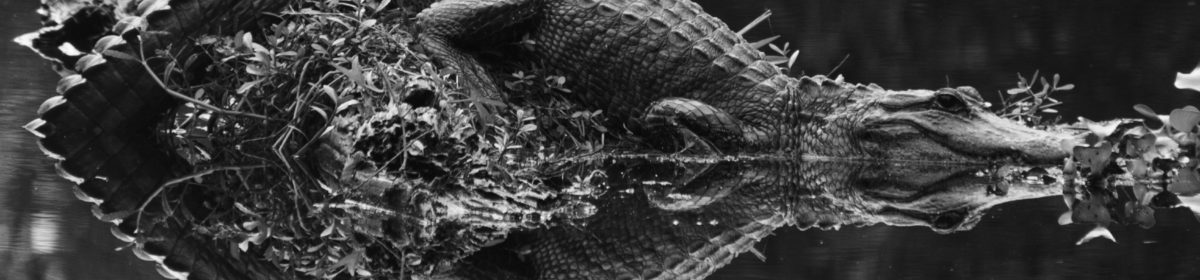
 

What I’m Thankful For [Encore Publication]: An opinionated list of my top five photographic blessings

At dinner on the American Thanksgiving holiday each year, the members of my family go around the table sharing our lists of what we’re thankful for.  This is a common tradition, and I find it energizing, comforting, and occasionally challenging to learn from my wife and daughters and any other family and friends gathered for the feast what they consider to be their greatest blessings.  So for this Thanksgiving Day post, I’m going to share a photographic what-I’m-thankful-for list.  Of our many modern photographic blessings, here is one photographer’s very opinionated list of the top five.

Jumping for joy over the brave new world of photography in which we live

  1. Instant image review: Those of us who cut our photographic teeth in the film era became accustomed to waiting for days to see the results of our work.  After shooting a roll of film, we would package it up, mail it to the lab, and receive our transparencies or prints back in a few days.  If we botched the exposure, focus, composition, or any other element of the image, we wouldn’t know until it was too late to recreate the shot.  For travel photographers, event photographers, and photojournalists, this was an especially harsh situation, as those once-in-a-lifetime moments would be lost forever if even a small setting was incorrect.  In today’s digital world, we get to preview each image instantly on our camera’s LCD display as it is captured.  If any aspect of the image is less than ideal, we can immediately retake it.  The built-in real-time histogram featured in many advanced cameras makes the instantaneous image review even more powerful, as we can see at a glance whether the exposure is in the expected range.  It’s so easy to take this capability to instantly review our images for granted, and many modern photographers do abuse it (pros call it “chimping” when a photographer constantly looks up and down at the LCD screen while shooting), but I am grateful every day to have this feature available.
  2. Modern full-frame image sensors: If you’d have told me when I was a kid that 40 years later we’d be able to instantly choose any sensitivity for our shooting needs from ISO 50 through ISO 25,000 and even higher, I’d have asked what you were smoking.  Same with the concept of a camera that can capture many times the resolution of what was possible on the most fine-grained 35mm films.  Ditto for the idea that our camera could focus for us, even under low-light situations with fast-moving action, faster and more accurately than we could achieve focus ourselves.  Or that we could just hold down our finger on the shutter release and the camera would shoot 10 or more frames per second with almost no limit to the number of images that could be stored.  All of this would have sounded like science fiction, yet modern full-frame image sensors provide all of these capabilities and much more.  My Nikon D810 bodies are so good at capturing images in nearly any genre of photography that I can’t imagine anything working better.  But of course every two to three years a whole new generation of sensors is released that does everything better still.
  3. The Nikon 85mm f/1.8 lens: We have so many incredible optics for which to be thankful that it’s hard to single out just one.  But there is one piece of glass that makes my heart sing with joy every day.  It’s inexpensive, small, light, fast as lightning, sharp as a razor blade, and renders accurate colors and glorious bokeh.  I do about 80% of my shooting with prime lenses, and probably two-thirds of that is with this one lens.  And that lens is the Nikon 85mm f/1.8 lens.  It’s a classic for making portraits but also works great for sports, wildlife, and even many landscapes.  If only everything else in life were so satisfying!
  4. Lightroom: Even with today’s amazing camera and lens capabilities, few images emerge perfectly from the camera.  Most images need some tender loving care during post-processing, and for my workflow needs, Adobe’s Lightroom software is perfect.  It’s great at importing, culling, and organizing huge batches of photos, and it’s editing features are all I need for more than 90% of my images.  Lightroom “thinks” the way a professional or enthusiast photographer thinks, and it’s quite intuitive to apply presets and/or automated batch tools to develop large numbers of images at once.  Thinking back on the old days of post-processing photos in a darkroom, I find that the digital counterpart (called “Lightroom” for good reason!) is so much faster, more powerful, and more gratifying.
  5. Instantaneous global sharing: Once our images are looking just the way we want them to, it’s time to share them with others.  Not long ago, this was a burdensome task.  It cost a lot of time, money, and aggravation to distribute just a few images with just a few people.  Now, with digital image capture, the Internet to distribute the images, and mobile devices with social media to view them, the world is at our fingertips.  There is a downside to this ubiquitous image sharing: we working professional photographers see the value of our work eroded by the flood of photos cascading around the world 24 hours a day; but in net this is a profoundly powerful and valuable asset to the art and business of photography.

Almost anywhere in the world we are immersed in a sea of images, making sharing them instantaneous, cheap, and far-reaching

There’s never been a better time to be a photographer (at least from an image capture and sharing standpoint; don’t get me started on the financial aspects), and in this exponentially evolving digital, interconnected world, it’s only going to keep getting better.

What are you thankful for in this brave new world of photographic goodies?  Please share your thoughts here.

Want to read more posts about photographic gear?  Find them all here: Posts about gear.