Photographic Blasphemy: Why you don’t need a tripod for most travel photography

Warning: The following assertion will sound heretical to many photography enthusiasts.  Stop reading now if you can’t handle the truth :-).

I’m going to say it.  You don’t need to carry a tripod for most travel photography situations.  There, I’ve said it.

This is blasphemy to many photographers.  After all, for the past 15 years or so, the badge of a “serious” photographer has been this three-legged object we stick between our camera and the ground.  Most scenic overlooks and other landscape photography-friendly locations have been positively flooded by a veritable sea of tripods in recent years.  I’ve seen viewpoints so clogged by tripods that photographers and even (heaven forbid) non-photographers are forced to elbow their way through just to get a place to stand to watch the sunrise, sunset, or other pretty happening.  For years, I have carried at least a lightweight tripod, and occasionally a heavy-duty professional tripod, with me to nearly every shoot, which for me is usually about two per day.  It’s become an ingrained behavior, a knee-jerk reaction, for most photographers.  But why, exactly?

During my recent travels in India, I made many wonderful images in all genres of photography.  I used a lot of gear to do so.  One item I didn’t use: a tripod.  Buy this photo

There are times when a tripod is necessary.  In very low-light situations, such as true nighttime scenes, most astrophotography, and some indoor shoots, it is essential to mount the camera on a sturdy tripod.  When a very long shutter speed is required for a specific effect, such as blurring water in a waterfall or shooting a dancer using rear-curtain sync flash, then you really do need a tripod.  We can even include shoots where several images will be combined using software to make a high dynamic range (HDR) or panoramic image in the category where a tripod is helpful (though, I would argue, not really essential anymore, given how good software has become at stitching overlapping images together).

But so many other times, a tripod is not only not an asset but actually becomes a liability.  Travel photographers must be very mindful of the size and weight of the gear we carry on our adventures.  Every item we bring has to be considered in terms of its value: will the space it takes up in our limited carry-on baggage allotment and its weight on our back every step of our trip be worthwhile in terms of its usefulness in making the best possible images?  A tripod, even a lightweight travel tripod, is a relatively large and heavy piece of gear.  There are other items we need to leave at home in order to make room for a tripod.

I recently returned from a 2.5-week journey through the north of India.  I brought as much gear as I could reasonably fit in carry-on for the international and internal Indian flights.  It weighed a lot, and I had to lug much of the gear I brought on the trip each day on my back through 115-degree heat, sometimes up steep hills to the top of ancient forts.  At the end of the trip, I contemplated my usage of each item I carried.  Both DSLR camera bodies, every lens (even the massive 500mm super-telephoto which I required to make great images of far-off tigers), the speedlights, both battery chargers, and all remote releases, cables, filters, cleaning supplies, etc. were used at some point during the trip.  The one item I never once needed: you guessed it, the tripod!

True, India is a very densely populated country where most sites do not allow tripods or, if they are allowed, the crowds are too thick to deploy them.  And there was ample bright sunlight at most of our locations to handhold the camera.

But I would argue that a tripod is simply not needed for many travel photography situations in general.  These days, a camera’s sensor is so fast and noise-free, and the camera’s resolution so high, that camera shake for most landscape photography settings is a much smaller risk than motion of the subject itself.  My Nikon D810 has a resolution of nearly 37 MB, so if a single tree branch or sometimes even a single leaf moves, I can see it in the image.  A tripod is no more going to stop a leaf from moving than could the ancient viking king Canute stop the tide from coming in (a story frequently misused in modern times, by the way).

From now on, when I pack for a day’s shoot or a month-long journey, I’m going to seriously consider whether I’ll need a tripod and will pack one (or two) only when I can reasonably expect to need it.

What about you?  Do you always carry a tripod, or do you consider its appropriateness before you travel?  If you always carry it, do you always need it?  Would you bring some other piece of gear along if you didn’t have to make space for the tripod?  Please share your thoughts on this controversial topic here!

Want to read more posts about photographic gear?  Find them all here: Posts on Gear.


Tyger, Tyger, Burning Bright: In search of the elusive royal bengal tiger in India’s Ranthambore National Park

Wildlife photography is one of the most exciting and rewarding pursuits I know, but it requires some special knowledge and gear, plenty of time, and lots of luck.  I’ve posted on this topic before, specifically about wildlife photography gear (Post on Wildlife Photography Gear) and about sensitivity to the wildlife we’re shooting (Post on Approaching Wildlife).  Today’s post is a case study on my recent wildlife safari in Ranthambore National Park in Rajasthan, India.  The park is famous for its population of wild royal bengal tigers, but even with its high concentration of the big cats, it is rare to see them.  We were fortunate to encounter two tigers during our game drives, one a female who was stalking prey at some distance from us across a meadow, the other a large male who was close to us but obstructed by dense jungle vegetation.

I was rewarded with a few marvelous images of the female tiger, my favorite of which is this one:

The money shot!  After weeks of planning, days of travel, hours of driving on rough tracks, and minutes of shooting, I had bagged several hundred images of this remarkable female tiger.  A few of the images had the required combination of tack-sharp focus, uncluttered background, and appealing view of the animal.  Buy this photo

Making an image like this requires careful planning to be in the right place at the right time.  In our case, our travel company lined up the logistics and hired an expert guide and driver, which certainly helps, but it is still necessary to prepare for a photo safari like this.  It requires some knowledge of the behavior of the wildlife you are seeking.  It calls for having the right gear and knowing how to use it under time pressure and without hesitating.  And it requires shooting a whole lot of frames in rapid succession, because most will not turn out perfectly.

To capture most wildlife, a long telephoto lens is a necessity.  My go-to long lens for wildlife photography is the Sigma 150-500mm f/5-6.3 lens.  It’s more economical than a Nikon or Canon super-tele, and it produces reasonably sharp images even when used at its widest aperture.  You can spend much more on this type of big glass if you want or need to, but I’ve found this lens works quite well for me.

Stability is very important when shooting a moving subject far away using a super-telephoto lens.  During most game drives around the world, a tripod or monopod cannot be used due to space constraints in the vehicle.  I will often use a beanbag to support the camera and lens, but on our canter (a large open vehicle that seats more than 20 people) in Ranthambore National Park, even that could not be used, as there is no surface to support the beanbag.  So the only option here is to shoot handheld.  Fortunately, the lens has good image stabilization built in, but it is also important to use good shooting technique and a very fast shutter speed.  Remember to keep one hand under the lens to support it, the other hand on the grip of the camera, and both elbows firmly pressed against your sides.  Gently squeeze the shutter release.  I recommend setting your camera to continuous shooting mode if it has this feature, as this will maximize the number of images you can capture as well as avoiding the camera shake from having to press the shutter release repeatedly.

To control exposure when shooting wildlife, I usually use Manual Mode with Auto ISO.  This little-known but extremely useful exposure mode allows you to set both shutter speed (which needs to be fast enough to avoid camera shake and to freeze the animal’s motion) and aperture (which I like to keep close to wide-open in order to soften the background), while adjusting the ISO to keep the exposure correct during changing lighting conditions.  To learn more about this technique, read this post: Post on Manual Mode with Auto ISO.

Shoot many images while encountering the animal in the field.  Keep them all on your memory card (which, of course, you should back up to another medium) until you have the opportunity to carefully cull them down to the ones that are technically adequate.  Finally, during post-processing, you can select the few images that are both technically acceptable (tack-sharp focus, proper exposure) and artistically appealing (the subject looks great, the background is uncluttered and attractive).  These selected images should then be carefully cropped and adjusted for exposure, contrast, and color balance.

There you have it.  The effort that goes into making just a handful of really excellent wildlife images is disproportionate to the workload involved in most tasks we do, and the frustrations are many, but the rewards when it all goes well and we have a wonderful portrait of the animal in hand make it all worthwhile.

What are your favorite wildlife photography techniques?  Please share them in the comment box.

Want to read more posts about photographic techniques?  Find them all here: Posts on Techniques.

Focus on Turkey [Encore Publication]: Spectacular photographic opportunities abound in this troubled nation

In the fall of 2015, my wife and I traveled throughout Turkey on a 2.5-week journey that included adventures in Istanbul, Cappadocia, the Turquoise Coast, and Ephesus.  We traveled with Overseas Adventure Travel (OAT) in the company of a local Turkish trip leader, and we had a wonderful, safe experience.  In today’s post I share our experiences and some of my favorite images from this spectacular but troubled nation.

First, a few words about safety.   Even when we traveled in September and October of 2015, there were concerns about the safety of travel in Turkey.  We did not visit the far southeastern regions of Turkey due to the ongoing violence between various factions from ISIS, Kurdish separatist groups, and the Turkish government.  There was a bombing with many casualties in Ankara while we were visiting a different part of Turkey.  Since our trip, the situation has deteriorated as a result of an escalating crisis in and around the border with Syria, terrorist actions throughout the country, and the broad government crackdown in the wake of the attempted coup earlier this year.  OAT, the company we traveled with, has since suspended all of their trips to Turkey.  Tourism in Turkey is being devastated by the concerns of safety on the ground.

So why would anyone want to go to Turkey?  The cultural, historic, and natural appeals of this destination are undeniable.  It is a travel photographer’s paradise.  And safety is a relative term.  I’ve traveled in over 100 countries and many of them were considered “unsafe” when I visited, but my only two close encounters with real terrorism were in supposedly “safe” cities: a bombing in Tokyo and a mass shooting in Los Angeles.  I felt safer in Turkey late last year than I do in many other parts of the world.  That said, the situation on the ground has deteriorated since I visited, tours to Turkey are becoming hard to find, and only you can decide on your tolerance for risk.  So perhaps wait for more order to return to Turkey before traveling there to make your own images, but in any case you can enjoy my images from this fascinating and gloriously beautiful part of the world.

Our adventure began in Istanbul, an ancient city situated at the border between Europe and Asia.  Its place as a crossroads of history from Roman times through the Byzantine Era, the Ottoman Empire, and the modern Turkish republic is apparent as you stroll its winding streets and ply its crowded waterways.  The are opportunities to make great images everywhere in the city.

Istanbul’s Hagia Sophia, the foremost Byzantine church, is nearly 1500 years old.  When shooting grand architectural sites from up-close, it’s a challenge to try to avoid distortion due to perspective and the necessity of using a wide-angle lens.  Here I kept the horizon level with the ground to avoid excessive distortion.  Buy this photo

The best baklava in Istanbul?  Perhaps.  I certainly didn’t taste any better baklava in the city, and believe me, I tried a lot of baklava.  To make this portrait, I asked our trip leader to introduce me to the baker, who was happy to pose with his wares.  This was shot with natural light and just a touch of fill flash.  Buy this photo

View of the Galata Tower from across the Bosphorous.  Buy this photo

After Istanbul, we traveled to the central region of Cappadocia, famous for its “fairy chimneys,” natural spires formed by the erosion of soft tufa rock.  This region is a veritable dream for travel photographers!

Upon arriving in Cappadocia, we were thrilled to learn our hotel room was inside an ancient cave dwelling.  (Not to worry, it had been recently remodeled.)  When shooting interiors, it’s usually best to use a fast wide-angle lens and to compose the image carefully so as to gain the viewing perspective you want.  Buy this photo

The Goreme Open Air Museum comprises dozens of ancient Byzantine churches carved out of the tufa rock.  Remember to capture some images that include yourself and your travel companions.  Refer to this post for more practical tips about making great self-portraits while traveling: Post on Self Portraits.  To make this image, I set up the camera on a lightweight travel tripod, composed it by having my wife stand in front of the “fairy chimney” church, then joined her in the frame and triggered the camera using a remote release.  Buy this photo

The soft tufa stone formations look almost like sand dunes in the late afternoon glow.  I shot in RAW mode (as always!) and underexposed slightly to allow for a higher-contrast image during post-processing.  Careful cropping also helps a striking landscape really pop.  Buy this photo

We awoke at 5:30 AM to the sight out our cave-hotel’s window of hundreds of hot air balloons launching about the fairy chimneys.  I jumped out of bed, barely remembering to throw some clothes on, before running out the our balcony to set up a tripod and capture this amazing scene.  I exposed for the rock formations and allowed the balloons to be partially silhouetted.  Buy this photo

We visited a school in the region, always a favorite activity during our travels.  While I also made quite a few images in the classrooms with the kids and teachers, I like the unusual perspective in this image.  It was shot from outside the school building as the kids came to the windows to wave goodbye.  Buy this photo

We took a very memorable hot air balloon ride at dawn over Cappadocia’s otherworldly landscape.  I made this image looking down from our gondola at three other balloons in various stages of preparing to launch.  The amphitheaters of soft tufa rock can be seen in the middle-ground and the rising sun in the far background.  Buy this photo

At a rug-weaving cooperative, this woman enjoys a cup of Turkish coffee during her break.  I was drawn by her colorful clothes and enigmatic smile.  I asked our trip leader to introduce us and inquire if it was okay for me to make a portrait.  Shooting quickly with natural light only, no time to set up a tripod, and a too-slow lens mounted on the camera, I had to boost the ISO setting quite high.  Fortunately, I was able to reduce much of the noise in the image during post-processing.  Buy this photo

Hiking up to the top of Uchisar Castle, the highest elevation in Cappadocia.  Buy this photo

We had the chance to watch a whirling dervish ceremony.  The Samazens, followers of Mevlana Rumi, are a mystical Sufi order who practice the ritual we witnessed.  To capture the sense of motion, I used a slower shutter speed to blur the participants.  Buy this photo

The Mevlana Museum houses the monastery and tomb of Mevlana Celaleddin Rumi, the mystic who founded the “Whirling Dervish” sect.  This image captures the incredible workmanship on the interior of the monastery, especially around Rumi’s tomb.  Flashes and tripods are not allowed inside the tomb, so I had to use a fast lens and high ISO setting to handhold the camera.  Buy this photo

We departed Cappadocia and drove to Antalya, the gateway to the southern Mediterranean region known as the Turquoise Coast.  Antalya boasts an ancient Roman harbor and a fascinating archaeological museum.

We happened upon an interesting scene when several archaeologists and their students attempted to match a recently excavated statuary head to a body already in the museum.  Always be on the lookout for serendipitous scenes, which often make the most memorable images from a trip.  Buy this photo

These Lycian house-tombs were carved into the cliffs centuries before the Romans arrived at Myra.  Buy this photo

We boarded our gulet, a traditional Turkish wooden sailing yacht, for a four-day cruise along the Turquoise Coast.  Each day offered a wonderful photographic tapestry of great images, as we sailed, hiked, swam, and dined.

Kayakoy is a ghost town, a Greek village abandoned when the Turks expelled Greeks after their war for independence in the early 20th century.  Turks living in Greece were also expelled the same year.  Buy this photo

My wife Mary spotted this rare wildcat, which looked to us a bit like our local Californian bobcat, along one of our daily hikes.  I changed lenses very quickly while slowly approaching the cat, then captured this portrait using a medium telephoto just moments before he slipped into the brush.  Buy this photo

A riverboat took us from our gulet yacht to the ancient Lycian site of Caunos.  This image of a beautiful kingfisher along the side of the river was captured using a long telephoto lens and a fast shutter speed to allow for handholding the camera on a rocking boat.  Buy this photo

On our last full day in Turkey, we finally got to visit the splendid ruins of Ephesus, a major Roman city in the region.

The ruins at Ephesus include the incomparable Library of Celsus, pictured here in a self-portrait of my wife and me.  To achieve the broad depth-of-field required to ensure both the people and the buildings were in sharp focus, I used a small aperture (large F-stop number).  Major archaeological sites are often packed with other visitors, so try to find vantage points that allow the crowds to appear small in comparison to your main subjects.  Buy this photo

Throughout Turkey, the food was vibrant, simple, and delicious.  Our final day’s lunch, in a beautiful village in the mountains, consisted of course after course of delightful meze (appetizers).  Buy this photo

Turkey is a remarkable destination for travel photography.  Let us hope its current troubles will soon be a thing of the past and that safe and affordable travel will again be available there.

Have you visited Turkey?  What were your most memorable experiences there?  Please share your thoughts here.

Want to read more posts about travel photography destinations?  Find them all here: Posts on Destinations.

Focus on Balaknama: Making portraits that go beyond documentation to help Delhi’s street kids

During a recent trip through the north of India, I had the opportunity to meet with the advisors and some of the young staff at the Balaknama Newspaper, a project to empower the street kids of New Delhi.  I’ve long been interested in the plight of the street kids who live in Delhi’s sprawling slums and have historically been terribly mistreated at the hands of exploitative child labor bosses, a corrupt police force, and often their own abusive families, so this visit was important to me personally.  In this post I share some of the images I made of the kids who risk their own safety to expose the abuses against the young people in their community, and I also discuss how to go beyond the purely documentary function of portrait photography to give your portraits more power.

The images I share here are published with permission from Balaknama’s editor and the NGO who supports the project.  However, I will not share the location of the offices nor the real names of the kids who work there, in order to protect their identities.

The power of a portrait to advocate for social change depends primarily on its ability to go beyond simple documentation and to reveal the personality, background, and/or motivation of the subject.  For this shoot, I wanted to convey the passion and bravery of the young reporters.  I shot with available light only (no flash) in order to capture the intimate and urgent mood of the work the kids are doing.  I used several lenses for different perspectives, but most of the images were made using a fast prime portrait lens.  My shooting perspective was from a low angle so as not to give the appearance of looking down on the subjects.  People appear more empowered when the camera observes them from the perspective of their peers–it should appear as though the viewer is a part of the conversation.

This 17-year-old reporter is also the primary organizer of more than 10,000 of Delhi’s street kids.  I wanted to capture her intensity and focus in this portrait, so I got in close with a medium-length portrait lens and shot from the perspective of a participant in the conversation.  A wide aperture (low F-stop number) is helpful to isolate the subject from the background.  Buy this photo

The “decisive moment.”  I shot several frames of this young reporter as he described the horrific abuses of his peers in the slums of New Delhi, in order to maximize the chances of capturing just the right instant.  I love this image, which to me appears to emulate the drama and body language of Francisco Goya’s famous painting, “The Executions of the Third of May, 1808”.

This powerful portrait has a painterly feel and freezes the tension and drama of the harrowing stories retold by the young reporter.  Buy this photo

The interaction between the students at the newspaper is an important theme.  Here I worked to capture the girls’ engagement with each other and with the overall discussion.  Buy this photo

Language barriers are less important than many photographers believe them to be.  A simple “thumbs-up” gesture evoked a playful response from these young Balaknama staffers, providing a light moment during the intensity of our conversation.  Buy this photo

As I’ve often written in To Travel Hopefully, it’s important to remember to include your own group in some of your images.  While I most likely won’t publish this image in my stories about Balaknama, I am happy to have this documentation of my fellow travelers as we interacted with the students and staff at the newspaper.

For large group shots in tight spaces, use a wide-angle lens.  This was shot with a Nikon 16-35mm f/4 lens at its widest setting, giving the viewer a sense of the setting as well as the people there.  Buy this photo

I wanted to capture a final portrait of the two primary student organizers as we left the newspaper’s offices, so I asked them to pose together during our walk through the neighborhood.  This gives a sense of the environment in which they live and work.  I got in close using a wide aperture to soften the background, but I also chose a background that would inform the viewer about the kids’ environment.  Buy this photo

Do you have techniques for making powerful portraits that go beyond pure documentation to advocate for the people and causes in the images?  Please share your thoughts here!

Want to read more posts about what and how to shoot while traveling?  Find them all here: Posts on What to Shoot.

Planning a Shoot [Encore Publication]: A case study in planning and executing a photo shoot

Whether traveling or near home, some of our best photo opportunities occur spontaneously.  Serendipity is part of the fun of photography, but another big part of the photographer’s craft is to carefully plan and professionally execute a photo shoot.  Using a recent shoot in which I collaborated with professional dancer Molly as a case study, in this post I’ll cover the essential elements of planning and conducting a shoot.

Good planning is key to ensuring a fun, safe, and efficient shoot as well as obtaining the desired artistic outcome.  Buy this photo

Elements to Consider When Planning a Shoot:

  • What is the theme or mood?  The artistic concept will inform all the other elements of the shoot.  For the shoot with Molly, we decided on an edgy, urban theme.  Based on that choice, the decisions about location, timing, gear, technique, and post-processing all flowed consistently.

We chose a gritty, urban theme for this shoot, and all other decisions flowed from that choice.  Buy this photo

  • Where is the location?  Often one of the most challenging aspects of planning a shoot is scouting for a suitable location.  The location, of course, should support the theme of the shoot.  It also needs to be accessible, safe (for this shoot, we rejected shooting on or near railroad tracks for safety reasons), and suitable for making the type of images desired.  There are also legal considerations, as in most cases permission is required to shoot on private property and even some public spaces require permission for commercial uses.  Molly and I eventually decided on using the old barracks at the decommissioned Presidio of San Francisco and the adjacent Crissy Field recreation area.  This space was accessible, relatively safe, provided a gritty and urban mood, and afforded sufficient working room for both dancer and photographer.
  • When should the shoot be scheduled?  Obviously, the date and time scheduled need to work for all parties involved.  These parties include not only the model(s) and photographer, but also other client(s) and often an assistant.  Equally important is ensuring the timing supports your artistic choices.  The season of the year and the time of day should offer the best chances of obtaining the lighting you desire.  The scheduled time should also work as well as possible with respect to other considerations such as opening hours of the chosen space, traffic and volume of other people in the location, and even tides, snowfall amounts, or other environmental factors.  Molly and I chose to shoot in the “golden hour” just before sunset on a Sunday to ensure good lighting and access to the location.
  • What gear and techniques should be used?  After choosing the theme and the supporting logistical elements, it’s time to select the techniques desired to capture the images and the gear required to execute.  Elements to consider include lighting (I prefer to work with available light and reflectors/diffusers whenever possible, but sometimes speedlights or portable studio lights are required), lenses (it’s often best to bring a range of lenses for different perspectives), props, and accessories (will you need to stabilize with a tripod, or perhaps you’ll require neutral density filters to obtain the shutter speed and/or aperture you want?).  In the shoot with Molly, I used the camera handheld at mostly fast shutter speeds and low camera angles with fast prime lenses to get that edgy look.

To capture the fast motion of the dancing and to support the urban theme, I worked handheld with fast prime lenses and low camera angles.  Buy this photo

  • How should the images be post-processed?  Again, the overall artistic concept should inform decisions about post-processing.  For this shoot, I aimed for a high-contrast, slightly grainy look and also converted several of the images to black-and-white.
  • How will the images be distributed and used?  All parties should agree before the shoot on how the images will be shared and/or sold.  To protect both model and photographer, it’s a good idea to sign a model release.  For more information on model releases, see this post: Post on Model Releases.

With attention to planning and execution, a photo shoot will be more enjoyable and productive and the artistic results will be better.  Buy this photo

Do you have tips and tricks you use when preparing for your shoots?  Please share your thoughts here.

Want to read more posts about planning your photography?  Find them all here: Posts on Planning.

To Travel Hopefully is Taking the Day Off: Please help support this site

Dear Reader,

To Travel Hopefully is taking the day off, but don’t worry, we’ll be back with fresh new content soon.

In the meantime, please take a look at the helpful travel photography tips and inspiring images in our archived posts.  Just select a category (Destinations, Gear, Techniques, Travel, etc.) from the right nav bar, or choose a month under Archives, and browse to your heart’s content.

While you’re here, take a moment to tell your friends and family about us.  Anyone who enjoys travel and wants to improve their photography will find great daily content here, including inspiring images from around the world and tips and tricks for making the best possible photos.  You can email any post or share it via social media with the click of one of the buttons at the end of each post.  And if you enjoy To Travel Hopefully, please click in the right nav bar to subscribe via email or RSS feed, so you won’t miss a single post.

Please consider supporting this site by purchasing some of my photos, browsing for some great gear via the Amazon links, or clicking on some of the ads that interest you.

My holiday special promotion ended on Dec. 31, but I have lowered most of my regular prices considerably.  Fine art prints and novelty items are available in a wide variety of sizes and price ranges for nearly every image in my portfolio.  Please take a look at Featured Photos to see a sampling of my images available for purchase.

And finally, I’d like to share some exciting news: In late January and early February, I will be leading a photography tour through the north of India.  This adventure will go way beyond the usual postcard-style shots to give photographers of all skill levels many unique opportunities to make images you won’t find elsewhere.  Details will be available in the next few days.  

Thank you for visiting To Travel Hopefully!  Without your support, this project cannot continue providing you with daily content including inspiring travel photos and tips and tricks for making great images.

Warm regards,

Kyle Adler

Black-and-White to the Rescue [Encore Publication]: Converting a noisy or strangely colored image to monochrome can save the day

In a recent post (Post on Circus Automatic), I shared several practical tips for shooting fast-moving indoor performances, using a circus performance as an example.  While I was happy with many of my images from that evening’s shoot, I discussed how the single-colored LED lights now used at many indoor performances can impart an unnatural color cast to photos that can be hard to correct in post-processing.  In today’s post, I show how converting these images to black-and-white can overcome some of the limitations of shooting under these adverse lighting conditions, with the added bonus that the noise imparted to the images (from having to shoot at a very high ISO setting) can also be less noticeable in black-and-white conversions.

First, a little background explanation on why these LED lights are so troublesome for the photographer to work with.  When we refer to the resolution, or number of pixels, in our camera’s sensor, that number is actually the total count of three different kinds of pixels, each kind sensitive to only one of the three primary colors (red, blue, and green).  Without going into the nitty-gritty technical details, suffice it to say that in most camera sensors, about 50% of the pixels record only green data, about 25% only red data, and about 25% only blue data.  My camera (the Nikon D810) is said to have a resolution of 36.3 megapixels (MP), but if my subject is lit by a single-colored red LED, in reality only about 9 MP of resolution is recorded.  The other two color channels will essentially contain no data.  This is bad for several reasons, most notably because the image will be cast unnaturally toward the red color channel and because its effective resolution will be low.

There’s very little we can do in post-processing to recover from the loss of resolution during capture, but we can adjust the color temperature to try to correct a little bit of the strange color cast.  Converting the image to black-and-white, though, can restore the image to a more natural appearance by masking the color cast.  This can be aided by using Lightroom’s contrast and color control sliders to adjust the balance of the black-and-white version until it appears closest to a normal tone.

Consider the following two versions of the same shot.  The first version is in color, and even after adjusting the color temperature and contrast, there is still a distracting red color cast.  There is also some noise apparent in the image as a result of the high ISO setting required to freeze the acrobats’ motion.

The color version of this image appears unnatural even after adjusting color temperature, due to the lighting which consisted of a red-colored LED array.

Now, take a look at the black-and-white version of the same image.  Creating this version required careful attention to the balance of each color and contrast setting to make the final image.  The good news: the monochrome image appears much more natural to the eye than does the color version.  The skin tones seem less artificial, and the curtain in the background does not distract as much.  Furthermore, there is less noise apparent in the black-and-white version.
The same shot appears more natural and less noisy when converted to a black-and-white photo.  Buy this photo

This next shot appears much more acceptable in its color version.  During a live performance, the lighting often changes drastically from one moment to the next, and in this image the LED lights didn’t impart as harsh a red cast as in the previous image.  Furthermore, the aerialist was dressed entirely in red and was working with red ropes, so what red color cast was present does not appear as unnatural.

This image is highly effective when presented in full color.  Buy this photo

While I like this image for its dramatic power and strikingly vibrant red colors, let’s take a look at a black-and-white conversion for comparison.  The monochrome version lacks the visceral impact of the strident red color, but it benefits from a more natural tone, a quasi-documentary look and feel, and a nice clean black background.  In this case, the black-and-white conversion doesn’t so much rescue the image as change the kind of feeling it elicits.  I like both versions.
The black-and-white version is cleaner and evokes a very different set of emotions than does the color version.  Buy this photo

When you are forced to shoot under very difficult lighting conditions, try converting to black-and-white during post-processing.  It just might rescue some of your images and can evoke a very different feel in other images.

For a refresher on the black-and-white conversion process and when you may want to use it, read this post: Post on B&W Conversion.

During post-processing, have you been able to rescue or improve images shot under challenging lighting conditions?  Did you convert to black-and-white, or use different techniques?  Please share your experiences here.

Hiking in Southwestern Ireland [Encore Publication]: How to capture glorious landscapes along the trails

The central portion of our recent trip through Ireland and Scotland was a week of hiking in the southwest of Ireland.  While we hiked independently, the logistics were arranged for us by a travel company called Country Walkers (http://www.countrywalkers.com/).  With its richly verdant and rugged terrain, glorious views to the sea and mountains, historic and cultural points of interest, and warm and welcoming people, this region is supremely rewarding for the travel photographer.

I highly recommend a visit to the very remote Gougane Barra peninsula.  There’s only one hotel, which offers outstanding food and views over a tiny island with a picturesque church and the ruins of a sixth century monastery.  A photographer’s paradise!

St. Finbarr’s Church stands on a tiny island on the Gougane Barra Peninsula.  To make this image, I shot in the early morning when the quality of light was compelling, got down low to include the rushes in the lake, and used a polarizing filter to bring out the textures in the water and sky.  Buy this photo

Don’t put away your gear when the sun sets!  On a rare clear night in rural Ireland, the photography is stunning.  Here’s an image of the Milky Way sprawling above the ruins of St. Finbarr’s Abbey, a sixth century monastery.

To capture the Milky Way, use a sturdy tripod and a relatively fast lens with a high ISO setting.  In most cases, a shutter speed of 20-25 seconds is best, but here I used a somewhat shorter exposure to avoid having the cross appear washed out in the site’s artificial light.  Buy this photo

We then hiked a segment of the long-distance Sheep’s Head Way.  You’ll rarely encounter completely clear skies while walking in Ireland, but the changeable conditions can create opportunities for glorious landscapes.  This lovely image was made just as the rain let up and the sun poked out, generating a vivid rainbow that spanned over the green fields and ancient walls.

Here I used my go-to landscape lens, the Nikon 16-35mm f/4 lens, fitted with a good circular polarizing filter.  I adjusted the angle of the polarizer carefully to enhance the sky without weakening the refraction of the rainbow.  I got down low to the ground to include the leading line from the old wall.  Other compositional elements include the sheep and the dramatic clouds.  Buy this photo

Ladder stiles are encountered frequently when hiking in this region, but are less familiar back home, so dramatic images can be made incorporating travel companions crossing fences using these ladders.  Here I used a wide-angle lens with polarizing filter to emphasize the expansive terrain and dramatic sky.  Buy this photo

At the end of the Sheep’s Head Way sits the lovely Bantry House, owned by the same family since 1750.  Climb the hill behind the house to capture the house and its gardens with the harbor behind.  Buy this photo

On our way to the start of our next day’s hike in Killarney National Park, we stopped at a viewpoint called Priest’s Leap for this lovely view.  I’ve said it before and I’ll say it again: remember to include yourself and your travel companions in some of your images.  Set up the camera and either mount it on a tripod or show another person how to release the shutter.  For more on how to make images including yourself, read this post: Post on Including Yourself

This image at Priest’s Leap was made using a normal lens with polarizing filter, stopped down to maximize depth-of-field.  Buy this photo

Ireland is filled with forests that are shrouded in mystery and magic.  Look for the little things as you walk: a flower or shamrock, a moss-covered tree, a tiny stream.  All that rain has the happy side-effect of making Ireland the greenest place I’ve ever seen.

Slow down and seek out the little natural details around you, like this moss-covered tree in Killarney National Park.  Buy this photo

The lovely Torc Waterfall within Killarney National Park is one of the most scenic in the region.  To capture the motion of the water, I used a neutral density filter to allow a long shutter speed and steadied the camera on a solid tripod.  Buy this photo

The legendary Gap of Dunloe outside of Killarney stretches for eight miles through mountains and valleys, along streams and by ancient farmhouses.  It can be traversed by horse-drawn carriages called “jaunting cars,” but the intrepid photographer will want to hike it instead.

The Gap of Dunloe offers compelling photographic subjects like this stream flowing in a valley surrounded by mountains.  A good wide-angle lens with a polarizing filter brings out the color and texture in such a landscape, even on a “soft day” like this one.  Buy this photo

Hiking isn’t the only great way to see the local landscapes.  After hiking the Gap of Dunloe, take a boat ride along the rivers and lakes to the ancient Ross Castle.

This mountain rising from the lake was captured during the boat ride back from the Gap hike, using a normal lens with polarizing filter.  Buy this photo

We spent every evening in Ireland visiting a pub or two.  These pubs differ in character, but all reflect the generous and friendly local culture, and many offer live music.

At a pub in Killarney, I was chatting with this fiddler during a break between sets and made this portrait using natural light with a fast portrait lens, a wide aperture, and a high ISO.  Buy this photo

My essential portrait lens:

We were fortunate to stay two nights in Killarney at the wonderful Lake Hotel.  The hotel grounds include the ruins of an ancient castle situated on a lake with mountains behind.  During breakfast on our second morning, I noticed the cloud cover had lifted but there was still mist hanging on the side of the hills around the lake.  I ran up to our room, grabbed my thirty pounds of camera gear, and rushed outside to capture the ruins with the mist enshrouding the lake and mountains.

There was no time to set up a tripod as the warming sun was burning away the magical mist on the lake, so I shot this image handheld.  Buy this photo

Our final day’s hike was the beautiful Wild Atlantic Way from Ventry to Dunquin.  The lovely views of the Atlantic are punctuated with green fields dotted with odd “beehive huts,” some dating back to the Neolithic Period.
To make this landscape incorporating ancient stone beehive huts and walls, I shot down across the fields to the sea, being sure to keep the horizon level.  Buy this photo

The picturesque Blasket Islands were home to a community of Irish-speaking farmer-fishermen until they were forced to evacuate in 1953.  This is one of Ireland’s most gorgeous stretches of coastline, captured here using a wide-angle lens with polarizer.  Rotate the filter until the sky is dark and dramatic.  Buy this photo

I hope this post inspires you to hike and photograph in this gorgeous region.  Expect some wet weather nearly every day, and prepare accordingly to protect yourself and your camera gear.  You’ll be richly rewarded with expansive views of some of the world’s greenest and loveliest vistas!

Have you visited southwestern Ireland?  What were your most memorable experiences?  Please share your thoughts here.

Want to see posts on other travel photography destinations?  Find them all here: Posts on Destinations.

Bracketing: Hedging Your Bets [Encore Publication]: In challenging shooting conditions, exposure bracketing is a great insurance policy

In the old film days of photography, it would be days or even weeks after shooting before we could see the results.  I would routinely use a procedure called “bracketing” to make a series of shots, each at a slightly different exposure, to increase the odds that one would come out decently exposed.  Even today, when digital photography allows us to see the results immediately, there are two good reasons to employ the exposure bracketing technique: 1) it can be hard to assess on a small LCD screen in bright daylight and while in the excitement of shooting whether the exposure is really correct, and 2) when the contrast between the brighter and dimmer parts of the scene is high we may want to stitch several different exposures together using software to create a high dynamic range (HDR) image later.

Tricky subjects, like this tiny Svalbard reindeer against a glacier background, benefit greatly from exposure bracketing.  From a series of 5, 7, or even 9 images shot at slightly different exposures, you can choose the one with the correct exposure for the conditions.  Buy this photo

So there are still good reasons to use exposure bracketing, and fortunately, it is quite easy to employ this technique.  Here’s how.

If possible, mount your camera on a tripod when using bracketing so it won’t move between exposures.  Then you can combine several of the exposures into an HDR image later if desired.

If your camera has a bracketing button or menu item, use it to specify how many shots you want to take (I usually shoot 5 or 7 different exposures when bracketing) and how much you want to vary the exposure between each shot and the next (often I choose a 1-stop difference).  If your camera lacks this feature, you can still use bracketing by manually adjusting the exposure between each shot and the next; just use your camera’s exposure compensation control to dial in first -2 stops, then -1 stop, then 0, then +1 stop, and finally +2 stops.

I like to set my camera for continuous shooting while bracketing.  That way, I just hold down the remote shutter release and the camera shoots all 5 or 7 exposures in rapid succession.  But it’s fine to shoot each frame individually in single release mode, if you prefer.

There are some subtleties to think about when employing exposure bracketing.  Some cameras let you choose whether to vary the aperture, the shutter speed, or the ISO setting, while holding the other two settings constant.  In most cases, I prefer to vary the shutter speed and hold the aperture and ISO settings constant, because changing the aperture affects the images’s depth-of-field, and changing the ISO setting can affect the noise in the image.

Later, during post-processing, you review the images and choose the one that is properly exposed.  Or if the scene is very high contrast, you can use photo editing software such as Lightroom or Photoshop to stitch several frames in your series together into an HDR image, which ensures good exposure from the brightest to the darkest tones in your photo.

Several exposures were shot using bracketing and then combined in Photoshop to create this HDR  image.  All tones from the darkest shadows on the mountain walls to the brightest highlights on the icebergs and lake are properly exposed in the final image.  Buy this photo

Have you used exposure bracketing techniques?  What are your best practices?  Do you use this process mostly for selecting the best exposure or for creating HDR images?  Please share your thoughts here.

Are you interested in learning new travel photography techniques?  Follow this link to see all the posts on techniques: http://www.to-travel-hopefully.com/category/techniques/.

The Best Auto Mode You’ve Never Heard Of [Encore Publication]: What is manual mode with auto ISO, and when should you use it?

I’ve written often in “To Travel Hopefully” about the importance of learning to go beyond your camera’s full “Auto Mode,” in order to be able to control the exposure of your images.  Frequently I like to shoot in full “Manual Mode” so as to be able to choose both my shutter speed and my aperture for full creative control.  But in rapidly changing lighting conditions, it is a real challenge to stay in full manual mode, and it’s a big help to allow the camera’s exposure programs to choose the best overall exposure from image to image.  There are a few ways to do this.  In between the full auto mode and full manual control, there are two common semi-automatic exposure program modes that most photographers are aware of, namely Aperture Priority and Shutter Priority modes.  In today’s post I introduce another exposure mode that few photographers are aware of, but that can give the best of both worlds: automatic exposure setting while retaining full manual control over both aperture and shutter speed.  This exposure mode is called “Manual Mode with Auto ISO.”

It’s important to be able to control shutter speed because that’s the mechanism by which we can freeze action or allow it to blur for creative effect.  It’s equally important to retain control over aperture because this is the means by which we can increase depth-of-field to keep everything in focus or decrease depth-of-field to soften the background.  But there’s a third side to the exposure triangle beyond shutter speed and aperture.  This third parameter is our ISO setting.  Several years ago, most camera sensors weren’t very good at handling noise at very high ISO settings, so we took a risk of ending up with very noisy images if we used our camera’s Auto ISO setting.  Not so today.  Many modern sensors are quite adept at capturing nearly noiseless images at ISO settings up to at least 3200 and often to 6400 or even a lot higher.  So the stigma that “serious” photographers have historically attached to using the Auto ISO setting should really be laid to rest.

That happy development allows us to use a mode called “Manual Mode with Auto ISO,” in which we set the camera’s exposure program to “M” or full manual mode but also enable the camera’s Auto ISO setting.  By doing so we can preserve full control over both our shutter speed and our aperture, but also allow the camera to choose the best ISO setting to give a good overall exposure as lighting conditions change.  Making this mode even more appealing, most cameras let us select the highest ISO setting (say, 6400) that we’re willing to allow.  So if the lighting level gets sufficiently dim, the ISO won’t go so high as to introduce a lot of noise into the image; instead, we just select a slower shutter speed and/or a wider aperture.

A good example of when it makes sense to use Manual Mode with Auto ISO is when shooting a street fair or an outdoor sporting event.  In these situations the lighting can change quickly depending on the cloud cover, what direction we’re shooting, and the subject and type of image we’re making.  The following three images were all shot at this year’s Carnaval San Francisco, a big street festival and parade.  It was a sunny day, but much of the parade route was in open shade, and depending on the subject there were times when I wanted to use some fill flash.  To freeze the motion, I needed a fast shutter speed, and to isolate my main subject I usually wanted a wide aperture.  Using Manual Mode, I could choose both of these settings.  But because the light conditions were ever-changing, coupling the use of Auto ISO with Manual Mode allowed the camera to adapt the exposure to the light levels for each image.

Full direct sunlight on the main subject made for very bright lighting.  Buy this photo

Open shade with a touch of fill flash required slightly different settings.  Buy this photo

A close-up portrait made in cross-lighting needed yet another exposure level.  Buy this photo

The next time you’re shooting in a shifting lighting environment yet also want to preserve full control over both shutter speed and aperture, try Manual Mode with Auto ISO.  It’s not covered in most cameras’ instruction manuals, but it can be a big problem-solver in many situations.

Do you use Manual Mode with Auto ISO to control exposure?  Do you have other tips for how to adapt to changing lighting conditions without handing over the creative control to your camera?  Please share your experiences here.

Want to read other posts about photographic techniques?  Find them all here: Posts on Techniques.


Will Photography Soon Be Obsolete? [Encore Publicaton]: Musings on AI as artist

A friend recently pondered via a social media post whether we will have photography as we know it in the future, or if artificial intelligence (AI) will soon generate all of our images.  With tens of millions of people now capturing snapshots on their phones’ cameras and instantly applying AI-generated filters to enhance or modify the images, we can certainly observe an increasing trend toward computer involvement in the making of photos.  But I don’t believe AI will replace the artist’s eye in the making of fine-art photographs for quite some time to come.  Here are a few semi-random musings on this theme.

A machine can certainly generate bad art.  In college in the mid-1980s, I wrote a program for my Computer Science final exam that composed musical canons (pieces in which each voice plays the same melody together, but starting at different times).  My code used a semi-random configuration of musical intervals as the opening melody, then applied a simplified set of the rules of counterpoint (how musical lines are allowed to fit together) to complete the canon.  I received an “A” for this project, but truth to tell, any listener familiar with classical music could instantly discern that the pieces composed by my program weren’t anything like the lovely canons written by Telemann, for example.  In other words, my AI didn’t pass the Turing Test.

In the more than 30 years since I wrote that program, AI has progressed by leaps and bounds.  Computers can now generate poetry, classical and jazz music, and even paintings that many non-experts judge as products of human artistic creativity.  I’m fascinated by the progress, but so far the best of the AI-generated “art” is really just imitation and trickery: it takes a seed of something original such as a photograph or a melody, and transforms it using a set of complex rules that could be described as a pre-programmed artistic style into something pleasant enough but not inspiring.

In his landmark 1979 book, “Gödel, Escher, Bach: An Eternal Golden Braid,” Douglas Hofstadter amazed the world by demonstrating comparable interlocking themes of grace and elegance among the very different disciplines of mathematics, visual art, and music.  He even speculated on the ability of machines to create works of great insight.  But Hofstadter’s proposed approach differed from that of the AI field that has developed since then in that he favored teaching machines to create via an understanding of how the human mind creates, as opposed to today’s AI approach of taking mountains of data and throwing brute force calculations at it.  To my eye, ear, and mind, this brute force method is the reason most of today’s attempts to artificially emulate the creative process are not insightful and do not add anything to their genres.  And so far, the vast majority of these attempts fail their respective Turing Tests.  That is, humans can tell it is a machine and not a human generating the “art.”

Applying these musings to the art of photography, what do see today?  To be sure, more images are being generated today than ever before in human history, and the art of photography is being devalued by its sheer pervasiveness.  Everyone captures images now, and most of them believe that makes them photographers.  While photographers have always required the involvement of a machine in the creation of their art, good photographers have always relied on their artistic vision, the so-called artist’s eye, to create images that are special.  I don’t believe that all the Meitu and similar AI filters that abound today are creating any photographic art that adds insight or helps interpret the world around us.

One very central component in photography is composition.  How does the photographer choose what elements to include in the image, and how will these elements be combined?  Read my recent post on composition here: Post on Composition.  This vital aspect of photography does use some “rules”, such as the Rule of Thirds, Leading Lines, Framing Elements, Point of View, Foreground/Background, and Symmetry and Patterns.  Rules, of course, can be programmed into an AI so that the machine can emulate the way humans create.  But in photographic composition, the “rules” are really just guidelines for getting started.  A good photographer knows when to break the rules for artistic impact.

Even the dumbest devices are capable of generating images.  Security cameras can capture images that we would consider to be rudimentary documentary photographs.  Given long enough, a security camera might accidentally capture what we would consider to be a good street photography image, because after capturing millions of dull scenes, sooner or later the camera will catch a random alignment of interesting elements.  It’s like thousands of monkeys typing random characters: given enough time, one of them will coincidentally type out a Shakespeare sonnet or even a full play.  As wearable computing devices become more pervasive, many people’s lives will be documented in real-time via the capture of millions of images.  Some of these may be interesting to their friends and perhaps the general public.  A few may even have artistic value.  But true artistry isn’t characterized by coincidence.

I don’t doubt that eventually we will get to the point where machines can create images as good as much of what humans can create.  I think we’ll get there, but it will take a long, long time.  And in the meantime, the role of photographer as artist, experimenter, and interpreter of the world around us will continue to be central to our society’s need for communication and expression.

What do you think about the future of photography?  Will we soon see machines creating much of our imagery?  How about our good, artistic imagery?  Please share your thoughts here.

Focus on Dance Brigade’s “Gracias a la Vida: Love in a Bitter Time” [Encore Publication]: Creative approaches to shooting inspiring performances

Recently, I had the privilege of shooting the dress rehearsal for a new show highlighting 40 years of activism through the arts, presented by San Francisco feminist and multi-cultural dance company, Dance Brigade.  Their work was extremely powerful and moving.  Not only was it artistically and technically astonishing, but the show was truly inspiring as a testament to the power of artists fighting for social justice.  In the current era we need this power to be wielded widely and wisely to balance the widespread injustice all around us.

When shooting work as inspiring as this, I often choose less traditional and more creative approaches to presenting my images.  In short, the medium should match the message, so when the message is as powerful as Dance Brigade’s performance, I believe the medium should rise to the occasion.  So, in addition to making some traditional documentary images shot looking directly toward the performers with an eye toward capturing the obvious, I also strove to capture some different and unusual perspectives on the performance.  I present some of them in the post with short descriptions of my intent for each image.

The usual rules for shooting a live indoor performance still apply.  Gain permission to shoot in advance directly from the show’s producer.  Use a fast lens and high ISO setting so as to be able to preserve a fast shutter speed to freeze action while still avoiding use of flash, which distracts performers and crew.  Turn off your LCD display and check your images only when there’s a break in the action.  Use the quietest shutter mode your camera supports.  And never use a tripod or monopod unless you have explicit permission from the producer.

Wait for the telling moment: There are instants during live performances that distill the overall message down to its essence.  Seek those moments.  Buy this photo

Tell a story: Just as a good performance is designed to reveal key messages to the audience at the appropriate time, so should the photographer capture images that disclose the underlying narrative.  This image of the climax from a piece on the plight of refugees captures the essence of the story.  Buy this photo

Find an unusual perspective: When shooting behind-the-scenes such as at a dress rehearsal, you have the opportunity to find just the right combination of vantage point and lens to make your images really pop.  This image was made from the lip of the stage.  I had to lean forward across the front of the stage and shoot upward.  I love this shot because it captures the artist from her eye level just at a decisive moment in the drama.  Buy this photo

Document the power of the performance: This piece started quietly and worked up slowly to a frenzy of pent-up anger and activism.  I found the best vantage point and waited for the perfect moment.  Buy this photo

Know when to break the basic rules of composition: Sure, most of the time you want to avoid cutting a performer’s head off.  But I saw the latent energy inherent in the unorthodox framing of this image.  By shooting from the static artist’s level and capturing only part of the jumping artist’s body, I transformed the image into a bolder statement that supported the message of the piece.  Buy this photo

Gain perspective: Not every image needs to include the whole environment.  Sometimes it’s more powerful to capture just the salient part.  Buy this photo

Capture a moment of pure joy: Shoot lots of images so that you can choose the ones that really make an impact.  The bold colors, shallow depth-of-field, and simple composition of this image work to emphasize the dancer’s aura of joyful triumph.  Buy this photo

Use black-and-white: This image cried out for me to convert it to monochrome.  Its raw documentary power and gritty, graphic nature are more compelling in black-and-white.  Buy this photo

Don’t be afraid to use selective focus: It’s okay for certain elements of your subject not to be in sharp focus.  I chose a narrow depth-of-field in order to obtain selective focus on just the performers in the middle of this triumphant circle.  The soft focus on the dancers in the foreground and far background only serve to enhance the dramatic power of the image.  Buy this photo

I hope this essay provides some ideas for how to shoot creative images that amplify the power of your message.  Modern digital photography provides us with so many tools for making images that go beyond the pure documentary function to also enchant our viewers with imagination.  A performance as moving as Dance Brigade’s “Gracias a la Vida: Love in a Bitter Time” deserves more than a straightforward narrative capture.  I tried to make some images that supported their messaging with a creative visual style.  Continue to capture the obvious message in your images, but keep shooting to go beyond the documentary.  Go wild, and see what you can achieve!

How do you go beyond the obvious to capture images that pop?  Please share your ideas here?

Want to read more posts about what to shoot while traveling or near home?  Find them all here: Posts on What to Shoot.


Focus on Northern India: A diverse tapestry of colors, cultures, and chaos, India will stay with you forever

My wife and I are just back from an amazing 2.5-week adventure traveling through northern India.  Operated by Overseas Adventure Travel, the trip’s diverse itinerary took us from the chaotic capital of New Delhi to the “pink city” of Jaipur, brought us face to face with wild tigers in Ranthambore National Park, continued to Agra to view the landmark Taj Mahal and Agra Fort, then on to the ornately carved 9th century Chandela temples of Khajuraho, and finally to the ancient holy city of Varanasi.  While it was exciting to view the iconic attractions of India, what made this adventure truly unforgettable for us was its many opportunities to interact with Indian people from all walks of life: pilgrims arrived in Varanasi to pray and bathe in the sacred waters of the Ganges River, street kids in Delhi who started their own newspaper to expose the exploitation and abuses of children in their community, a matriarch and her family as they keep house in a tiny remote rural village, students at a village school, and women in Agra who survived horrific acid attacks and are advocating for awareness and justice.  India is a diverse tapestry of colors, cultures, and chaos that will inspire you and stay with you forever.  And for a travel photographer, visiting the north of India is a dream come true.

In today’s post we will take a look at some of my favorite images from this adventure.  I’ll include some brief discussion about who or what is included in each image and, where appropriate, a few words about how each image was made.

Our adventure began in the capital and largest city, Delhi.  The old part of the city is truly ancient, with a heritage dating back more than 1000 years.  But Delhi’s heritage also includes the British colonial period in the 19th and 20th centuries, and New Delhi today is the capital of the Indian republic and home to 22 million people.

People waiting for the next meal service at the Gurdwara Bangla Sahib Sikh temple in New Delhi.  The staff and volunteers there serve more than 8000 free meals per day to the needy people of New Delhi.  To make this image, I used a telephoto lens and shot from a low angle so as to compress the scene and capture the epic scale of the crowd.  In post-processing, I cropped the image to better lead the viewer’s eye around the scene, and I tweaked the contrast and vibrancy to better represent my original emotions on being in the middle of this scene.  Buy this photo

Our first gift purchase was a set of necklaces from this girl who sold them roadside in New Delhi.  To make this portrait, I used an 85mm portrait lens at a wide aperture (small F-stop number) to blur the background, and I added just a touch of fill-in flash using a handhelf off-camera strobe connected with an extension cable.  Buy this photo

We met this lovely girl at the Jama Masjid, India’s largest mosque, and she graciously agreed to pose for a portrait.  Many travelers will try to “take” photos of people they see on their trips by simply pointing the camera at them or using a long lens to hide their intentions.  To “make” (not “take”) really compelling portraits, it’s essential to have a personal connection with your subject.  Even though we didn’t share a common language, we engaged the young woman in “conversation” using a combination of smiles and hand gestures, and once we were comfortable together, I used the universal gesture to ask if she would pose for my camera.  Buy this photo

For an authentic Indian experience, we took a thrilling and bone-rattling 30-minute ride through the crowded lanes of Old Delhi in a bicycle rickshaw.  In this image I tried to capture the sense of chaos and crowding as we experienced it from the rickshaw.  I shot from the perspective of the passenger and framed the image using the top of the vehicle.  I used a small aperture (high F-stop number) to ensure the whole vista would be in focus, and I set the exposure based on the motorcyclist in front of us.  Buy this photo

Qutab Minar is the symbol of New Delhi and was built in the 12th century.  The minaret is 234 feet high and a crowning achievement of Indo-Islamic architecture.  To fit in the entire tower, a wide-angle lens was required, but I was careful to frame the image so as to avoid distorting the structure too severely.  I timed this shot to capture the jetliner as it overflew the site.  Buy this photo

We made an inspiring visit to the Balaknama newspaper, run by New Delhi’s street kids as a platform for getting their voices heard and for championing fair treatment of these historically underserved and abused children.  This 17-year-old girl is the primary organizer of 10,000 of New Delhi’s street kids.  The portrait was made using only available light (no flash), as I didn’t want to disrupt our conversation with the kids.  Because the light was so dim inside the building, I had to use a very fast portrait lens and a high ISO sensitivity setting.  Buy this photo

After leaving behind the bustle of New Delhi, we traveled overland to Jaipur.  Known as the “Pink City” for the peculiar rosy color its downtown buildings were painted in preparation for a royal visit, Jaipur is home to several of India’s most impressive historical sites.

We arose very early in the morning to embark on a hot-air balloon ride over the rural villages and farms surrounding Jaipur.  I shot this image of a brick-making factory from the gondola of our hot-air balloon using a telephoto lens to compress the perspective.  I converted the image to black-and-white during post-processing in order to emphasize the patterns and textures of the stacks of bricks surrounding the camel-drawn cart.  Buy this photo

Our balloon landed in a field outside a tiny village in rural Rajasthan.  All of the villagers came out to our landing site to say hello.  Here we are posing in front of the hot-air balloon, together with our new friends in the village.  I did not have time to set up my tripod for this shot, so I enlisted a fellow traveler to release the shutter for me.  When using this method to capture yourself in a photo, be sure to preset all of your camera’s controls and show your volunteer exactly how you want the image composed.  Buy this photo

This wonderful elder lady of the village danced for us and generally entertained the whole village.  Equally entertaining to the villagers were the dances we attempted to perform for them.  Buy this photo

Jaipur’s landmark Palace of the Winds provided nearly 1000 windows through which the women of the court could look down on the streets below.  Careful attention should be paid to composing architectural images so as to capture the building in a striking way.  Here I used a wide-angle lens and composed slightly off-center so as to portray some depth to the image.  Buy this photo

During our home-hosted dinner in Jaipur, we enjoyed a lovely meal cooked by our hostess Ruchi.  Most images of food are made by shooting straight down on the plate from above, but here I wanted to convey the conviviality of the meal by shooting from the perspective of a diner at the table.  Buy this photo

Outside of Jaipur we were privileged to come across and participate in a pre-wedding dance celebration in honor of the couple who were to be married the following day.  This portrait was composed from a low angle right in front of the dancer to truly put the viewer into the middle of the action.  A fast shutter speed was used to freeze the motion, and I chose a small aperture (high F-stop number) to keep the whole scene in focus.  Buy this photo

After Jaipur, we set out overland across the heart of Rajasthan, heading for Ranthambore National Park.  This wildlife preserve is home to many species, including spotted deer, the large sambar deer, langur monkeys, crocodiles, and more than 450 species of birds.  But it is best known for its population of wild tigers, one of the highest concentrations of tigers in the world.

Although Ranthamore National Park is one of the best places in the world to attempt to observe tigers, even there it is unusual to see them.  We were very fortunate during our early morning game drive to encounter two tigers.  The first, this female, was not particularly close by was stalking prey in an open and forested terrain.  The second, a large male, was near our vehicle but was obscured in dense jungle.  The key to successful wildlife photography is to shoot lots of images.  I shot more than 200 frames of this tiger in order to ensure a few would be of excellent quality.  I used the bulky and heavy 500mm lens that I had carried all the way from San Francisco in the hopes that we’d encounter a tiger.  The images were shot with a fast shutter speed to freeze the animal’s motion and to reduce camera shake, and I used a relatively wide aperture (low F-stop number) to throw the background out of focus.  Careful attention should be paid to composing wildlife portraits without too much clutter in the background.  Buy this photo

We visited a school in a rural Ranthambore village.  It was a delight to meet the students there.  Here my wife Mary chats with two sixth-grade girls who hope to become engineers when they grow up.  They were very happy to meet Mary, a female engineer herself, and to learn about careers in the field.  When photographing children, many people shoot from their own eye level, which results in portraits that appear condescending to the subject.  It’s better to get down to the child’s eye level or even below so as to show the world from the subject’s point of view.  Buy this photo

After our school visit, we strolled through the village to get a sense of the daily life of the people living there.  A highlight was a visit to this matriarch’s home.  Many of the local kids came by our hostess’ house to say hello to us.  The eyeliner on the kids’ faces is intended to make their eyes look bigger.  Once again, I got down low to capture the scene from the perspective of the kids.  Buy this photo

A women’s cooperative trains village women to make handicrafts, providing them with income and empowering them to invest in the community and their own futures.  We enjoyed lunch with several of the artisans, and after getting to know the woman who sat at our table, I made this compelling portrait.  I got up-close and used a classic 85mm portrait lens with a very wide aperture (small F-stop number) to soften the background.  In post-processing I brought out the colors in her sari and scarf, and I added a bit of vignetting to darken the edges of the image and emphasize the subject.  Buy this photo

En route to Agra, we visited the remarkable Abhaneri step-well, an ingenious solution to bring up water from a very low water table.  In this image I wanted to emphasize the step-well’s abstract, Escher-esque appearance, so I composed it using a telephoto lens to frame the seemingly endless symmetry of the ladders.  In post-processing I converted the image to black-and-white to bring out the patterns and abstraction.  Buy this photo

To break up the very long drive from Ranthambore to Agra, OAT provides an overnight stay at a tented camp.  Here our entire group (except for your intrepid photographer-author) gathers around the campfire for drinks, snacks, and folk-dancing.  Buy this photo

Agra is home to India’s most visited and loved site, the Taj Mahal.  Of course, the Taj is a must-see, but our visit to Agra also included worthwhile visits to the Agra Fort and a farmer’s market, as well as a very moving and inspiring encounter with women survivors of acid attacks.

Early in the morning we visited a farmer’s market in Agra.  I used a medium telephoto lens to capture this fruit seller as he enjoyed a smoking break (right on top of his wares).  Buy this photo

Sheroes’ Cafe in Agra is a project founded by and for the women of India who are survivors of acid attacks.  We were so inspired by meeting Rupa and learning about her story and her road to physical and emotional recovery after her brutal attack at the age of 15 by her stepmother.  Through this project, Rupa has gained the confidence and independence to leave home, meet other survivors and activists, build a business as a clothing designer, and access the surgical care required to reconstruct her face.  The courage and resilience shown by the women we met at the cafe moved us to want to help their cause to educate people and improve the treatment of India’s women.  Buy this photo

When shooting an iconic site such as the Taj Mahal, I try to avoid capturing the “postcard shots,” opting instead to capture the well-known site from a less-known vantage point.  The Moonlight Garden provides a less crowded and even more lovely alternative view of the Taj Mahal at sunset.  As I’ve said before and will surely say again, don’t forget to include yourself in some of your images.  Buy this photo

To get from Agra to Khajuraho, the seat of the 9th and 10th century Chandela Dynasty, it is necessary to take first a train and then a long drive.  It’s worth the effort!  The ancient temple complexes at Khajuraho are adorned with ornate carvings depicting all aspects of life.  Many of the carvings are erotic in nature, which shocked the Victorian British who excavated the site in the 19th century.

The Chandela Dynasty ruled Central India for several hundred years beginning over 1000 years ago.  The temple complexes at Khajuraho are well preserved and are fascinating for their intricate stone carvings, many of them erotic.  Here I included a rhododendron tree in the foreground to provide some contrasting color and texture against the stone of the temple.  Buy this photo

Our final destination in India before returning home by way of Delhi was the ancient sacred city of Varanasi.  This was a highlight of the trip.  Families of the deceased join pilgrims and holy men along the banks of the Ganges River using its sacred waters to cremate the dead, bathe, and pray.  Boat rides along the Ganges in the morning and again in the evening afforded us the chance to observe the many rituals conducted here by India’s Hindus each day.

A sadhu (holy man) on the banks of the Ganges River.  Because the sadhus are dependent on alms to survive, it is important to offer a small amount of money in order to make a portrait.  Buy this photo

Bathing in the sacred Ganges River.  This favorite portrait was made after meeting the two women, getting their permission, and shooting from behind as they prepared to bathe and pray in the river.  To impart the dreamlike mood of the scene into the image, I framed it with the brightly colored women at the front surrounded by the mystical dark color of the water.  I used a wide aperture (high F-stop number) to blur the water, and in post-processing I created a slight vignette to darken the corners of the image.  Buy this photo

We took a second boat ride, this time in the evening, to witness aarti, the sacred light ceremony in which priests thank the river Ganges for providing purification.  This colorful ritual provided a fitting ending to our memorable 2.5-week visit through the north of India.  Buy this photo

Have you visited India?  Please share your fondest (and least fond) memories here, along with your thoughts about how to capture India’s vibrant diverse scenes in images.

Want to read more posts about travel photography destinations?  Find them all here: Posts on Destinations.

 

Focus on Tanzania [Encore Publication]: Every wildlife photographer’s dream destination

There are very few destinations more exciting to us travel photographers than East Africa.  My family’s 2.5-week trip to Tanzania, with a brief stroll into Kenya, was a dream come true.  Operated by Overseas Adventure Travel, the adventure began with a pre-trip excursion to the Kilimanjaro region, then moved on to the regional capital city of Arusha and to safaris in Tarangire National Park, Olduvai Gorge, Serengeti National Park, and Ngorongoro Crater.  It goes without saying that the wildlife photography in Tanzania is second-to-none, but we found the authentic cultural interactions with the nomadic Maasai and other local people to be a highlight of the trip.

The usually shy Mount Kilimanjaro made a brief appearance as we awaited sunset near our lodge.  The glaciers that adorn this iconic landform are melting quickly as a result of climate change, so this is a place to visit soon.  I used a polarizing filter on a medium telephoto lens to reduce the haze and bring out the texture of the mountain, and I framed the shot through some branches near our campfire.

Mount Kilimanjaro lit by alpenglow.  Buy this photo

On a game drive in the Kilimanjaro region, we encountered this lovely lilac-breasted roller.  To capture this image, I used a long telephoto lens (500mm, which was equivalent to 750mm when fitted on this camera) and stabilized it on a beanbag that I rested on the top of the safari vehicle.  This is a very important accessory to bring with you on a safari, as you cannot fit a tripod in a safari vehicle and a monopod is awkward.  While the beanbag that I use is no longer available, this one is well reviewed by photographers and represents a good value.


Lilac breasted roller captured with a 500mm lens in the Kilimanjaro region.  Buy this photo

The cultural learning and interaction was a big part of this trip.  Here my older daughter is greeted by a young Maasai woman as we arrived at their settlement.  The Maasai are nomadic herders, usually moving from place to place to pasture their cattle throughout the seasons of the year.  It was a fascinating opportunity to meet them and learn about their way of life, and to make portraits with the Maasai people we met.

A warm welcome as we arrived at the first of two Maasai villages visited during our trip.  Buy this photo

I had a fun interaction with this young Maasai boy by showing him the images as I shot his portrait in various places around the village.  He had not seen many photos of himself.  Here he is posing in front of his family’s house.

A Maasai boy by his family’s shelter.  Buy this photo

Our visit to the bustling city of Arusha was intended to be a staging point for the game viewing excursions to follow, but we found Arusha to be a very interesting cultural crossroads.  Here is a shot of what passes for a towing service in the area, a broken-down van being pulled to a service station on top of a donkey cart.  Always be on the lookout for serendipitous moments like this one when you travel!

A street scene in Arusha, the region’s largest city.  Buy this photo

Along the road from Arusha to Tarangire National Park, we stopped to chat with a group of several young Maasai men.  They had recently undergone the ritual circumcision ceremony that marked an important milestone on their journey to become warriors.  For the next six months they would wear the special face paint while they underwent their final training.  Our local guide was very helpful in facilitating our conversation.  Through him, I asked this man’s permission to make a portrait.  This was shot with a moderate telephoto lens and a wide aperture to soften the background.

A young man nears the end of his journey to becoming a Maasai warrior.  Buy this photo

Tarangire National Park is a gem of a nature preserve that is often overlooked by visitors to Tanzania.  Be sure to visit Tarangire if at all possible!  Here’s a shot of a baby baboon in a group of baboons we were observing there.  When shooting backlit wildlife, use your camera’s spot metering mode with the focus point on the animal, so your camera won’t underexpose the main subject.

A playful baby baboon in Tarangire National Park.  Buy this photo

We stopped for a visit to a second Maasai settlement, very different from our first Maasai encounter.  This second group of Maasai were only semi-nomadic and lived much of the year in a more permanent settlement.  While their way of life was a bit less precarious, and included public education and solid housing, they still lacked a source of safe drinking water, a common problem in East Africa.  We presented the chief with a water filter we had purchased in Arusha, for use by the whole village.  This group portrait was made of the villagers when they accepted our gift of the water filter.

Maasai villagers with their new water filter.  Buy this photo

Serengeti National Park is the stuff we travel photographers’ dreams are made of!  Along with game walks and game drives in open safari vehicles, we also had the chance to soar silently above the Endless Plains in a hot air balloon.  This is an amazing way to view the migrations of the herds and the predators and scavengers that tag along.  This image was made by shooting down from the basket of our balloon toward a balloon closer to the ground.  You can see the trees and herds of wildebeest on the plains below.

Safari by hot air balloon.  Buy this photo

Of the hundreds of animal species we encountered, including so much more than just the Big Five, the leopard was one of the most elusive.  Here we spotted (as it were) a leopard napping in a tree in Seregenti National Park.  This shot was made with a long telephoto lens resting on a beanbag in our safari vehicle.  My go-to lens for wildlife photography is the Sigma 150-500mm f/5-6.3 lens.  It’s more economical than a Nikon or Canon super-tele, and it produces reasonably sharp images even when used at its widest aperture.  You can spend much more on this type of big glass if you want or need to, but I’ve found this lens works quite well for me.

A sleepy leopard yawns in a tree above the Endless Plains of Serengeti National Park.  Buy this photo

The migration of the herds is an annual event across the combined national parks of Serengeti in Tanzania and Maasai Mara in Kenya.  It’s a spectacular sight as millions of wildebeest, zebra, and gazelles slowly migrate across plains and rivers, occasionally being eaten by the predators who follow them.  To give a sense of the scale and the action, in this image I zoomed in on a group of wildebeest with a telephoto lens so as to compress the scene.

A small vignette from the massive migration of the herds across the East African plain.  Buy this photo

We were very fortunate to come across this quiet scene of a lioness with her newborn cubs.  We watched from a distance so as not to disturb this family as she cleaned and played with her two cubs, them mewing like housecats all the while.  The light was low in this glen, and the long telephoto lens was slow, so I stabilized it on a beanbag and shot at a higher ISO setting to allow for a reasonably fast shutter speed.  There was some noise in the image as a result of the high ISO (camera sensors weren’t as good at high sensitivities back in 2012), but I did my best to reduce the noise during post-processing.

A mother lion spends some quality time with her cubs.  Buy this photo

We visited a primary school in a small community.  This was one of the first schools in Tanzania to serve breakfast and lunch to students who walk miles each way to school and would have to double their daily walking distance if they had to return home midday for lunch.  My daughter enjoyed talking with students about their daily lessons.

Visiting a classroom at a rural primary school.  Buy this photo

Farewell to Tanzania!  My family enjoys a glorious African sunrise at our tented camp located right inside the national park.

A Serengeti sunrise.  Buy this photo

Want to see posts on other travel photography destinations?  See them all here: http://www.to-travel-hopefully.com/category/destinations/.

Have you visited East Africa?  What were the highlights of your trip?  Please share your comments here.

Approach with Care [Encore Publication]: Sensitive photographic practices help keep wildlife wild and healthy

Photographing wildlife in its natural habitat is one of the most exciting and rewarding activities I can imagine.  From researching the species’ behavior to seeking it (sometimes for days) in the field, to that wonderful moment its image is captured on our memory card and to the thrill of viewing that image when we return from the field, there’s something truly magical about this genre of photography.

Observing and photographing animals in the wild, such as this rare wildcat along Turkey’s Turquoise Coast, is thrilling.  Strive to put the animal’s welfare ahead of your image-making.  Buy this photo

Done properly, wildlife photography can have zero to very modest negative impact on the creatures whose images we capture.  In fact, photographers have done a great deal over the decades to help preserve wildlife through sharing images that inspire local people, governments, and the public to protect endangered species.

But by stalking and encroaching on a species’ territory, we photographers also put wildlife at risk of harm.  Improperly engaging with animals with the intent of photographing them can cause a predator to starve by allowing its prey to escape, cause another creature to become prey by distracting it from its natural wariness, stress the animal to harmful levels, or acclimatize them to being around humans.

Here are some important guidelines for photographing wildlife in as safe a manner as possible:

  1. Do your homework: The more you know before you set out to encounter a creature, the less likely you are to cause it harm inadvertently.  If you will be going with a safari or tour, research the outfit first to make sure they follow the highest ethical standards.  Get to know the behavior of the species you are seeking.  What is their daily and seasonal routine?  Where is their habitat?  What do they eat and what eats them?  What is a safe distance from which to view them?
  2. Keep a respectful distance: As kids we were told to keep away from wildlife for our safety, but as photographers we also need to consider how far away we must stay in order not to cause the animals undue stress.  Knowing where their meal ticket comes from, some safari and tour operators are willing to break park or preserve rules and approach the animals very closely so their clients can get great photos.  Do not encourage this.  Aside from the harm this stress can cause the animal, a stressed animal will look stressed in your photo and is more likely to bolt and leave you with no photo at all.  So, use a long telephoto lens, keep your distance, and both your subject and your images will be the better for it.
  3. Show special respect for the young: Baby animals are extremely vulnerable and should be treated with special care.  If you are traveling with a tour, defer to your guide’s knowledge.  If you’re on your own, be sure you’ve done your homework first, and err on the side of caution.Young animals, such as this baby baboon in Tanzania’s Serengeti National Park, should be photographed with special care.  I made this image using a long telephoto lens and shot from a safari vehicle parked at a respectful distance.  Buy this photo
  4. No kidding–don’t feed the animals: It seems almost too obvious to have to state, and yet nearly every day I encounter humans attempting to feed wildlife.  In Yosemite National Park, a number of bears must be killed each year because they have become dependent on humans for food.  At your local city park, you’ll probably observe people trying to feed the birds or squirrels.  And of course there are the big news stories (the recent major one was about the killing of the beloved Cecil the Lion) about hunters baiting animals with food.  A well placed and properly maintained bird feeder in the backyard may be okay, but no other attempts should be made to feed wildlife.
  5. Come back another time: In today’s networked world, word about rare animal sightings travels quickly.  If you hear about a sighting while traveling or near home, chances are many other photographers and watchers have also heard about it.  Multitudes of humans crowding around an animal will put it under undue stress and will also ensure you won’t make a great portrait of it.  Come back another time when there are fewer other people.  No photo opportunity is so irreplaceable that we should put the wildlife at risk.

With a little knowledge and courtesy, photographers can make great wildlife images while helping preserve and protect their subjects and keeping the wildlife wild.  Conversely, without respect or information about the local fauna, we run the risk of putting them at grave risk.  As the saying goes, make good choices!

The world’s smallest species of reindeer, the Svalbard reindeer is at risk due to global climate change.  Cautious and respectful photographers can use their images to help protect and preserve at-risk species.  Buy this photo

Do you have best practices about shooting (with a camera, that is) wildlife in the field?  Have you observed human behavior–positive or negative–that serves as an example?  Please share your thoughts here.

Want to read more posts about what to shoot while traveling or near home?  Find them all here: Posts on What to Shoot.


Stripped Down to the Bare Essentials [Encore Publication]: Cupid’s Undie Run supports Children’s Tumor Foundation

I’m fortunate to live in the San Francisco Bay Area, where fun, crazy, photogenic events–planned and spontaneous–occur nearly continuously.  But the zany and colorful annual event known as Cupid’s Undie Run, for which participants strip down to their underwear and run through the city’s streets to raise money for Children’s Tumor Foundation, is actually held in dozens of cities around the world.  The San Francisco version was quite small this year, in spite of 60-degree mostly sunny weather, but it was as energetic, irreverent, and just plain fun as ever.  Today’s post features a few of my favorite images from this Valentine’s Day inspired event.  This time, it’s just for fun; I’m not going to annotate the images with a lot of detailed information about how they were made.  Enjoy, and consider supporting this valuable charitable cause: Children’s Tumor Foundation.

In between rounds of margaritas, a quick run along San Francisco’s waterfront.  Buy this photo

Happily, the weather was unseasonably warm and dry.  Buy this photo

The “finish line” is the front door of the pub.  Buy this photo

It wouldn’t be Cupid’s Undie Run without Cupid.  Buy this photo

Speaks for itself.  Buy this photo

A quick reminder about how to make a stunning portrait: 1) find soft and appealing lighting, 2) get in close with a medium portrait lens, 3) select a wide aperture for shallow depth-of-field.  Buy this photo

I love this town!  Buy this photo

Look for this fun event in your town next year around Valentine’s Day.  And, whether you’re traveling around the world or right in your home town, seek out those fun and quirky happenings that yield eye-catching images.

What are some of your favorite events to shoot, and why?

Want to read more posts about what to shoot while traveling or near home?  Find them all here: Posts on What to Shoot.

To Travel Hopefully is Taking the Day Off: Please help support this site

Dear Reader,

To Travel Hopefully is taking the day off, but don’t worry, we’ll be back with fresh new content soon.

In the meantime, please take a look at the helpful travel photography tips and inspiring images in our archived posts.  Just select a category (Destinations, Gear, Techniques, Travel, etc.) from the right nav bar, or choose a month under Archives, and browse to your heart’s content.

While you’re here, take a moment to tell your friends and family about us.  Anyone who enjoys travel and wants to improve their photography will find great daily content here, including inspiring images from around the world and tips and tricks for making the best possible photos.  You can email any post or share it via social media with the click of one of the buttons at the end of each post.  And if you enjoy To Travel Hopefully, please click in the right nav bar to subscribe via email or RSS feed, so you won’t miss a single post.

Please consider supporting this site by purchasing some of my photos, browsing for some great gear via the Amazon links, or clicking on some of the ads that interest you.

My holiday special promotion ended on Dec. 31, but I have lowered most of my regular prices considerably.  Fine art prints and novelty items are available in a wide variety of sizes and price ranges for nearly every image in my portfolio.  Please take a look at Featured Photos to see a sampling of my images available for purchase.

And finally, take a look at my upcoming photography tour of the Pacific Northwest, including the Great American Total Solar Eclipse, one of the most incredible astronomically events of our lifetimes.  I hope you can join us on this amazing tour this coming summer.

Thank you for visiting To Travel Hopefully!  Without your support, this project cannot continue providing you with daily content including inspiring travel photos and tips and tricks for making great images.

Warm regards,

Kyle Adler

News Flash: Google Trips now available [Encore Publication]: A new app for your smartphone can help plan and manage your next trip

Google recently announced a new smartphone app (for iOS and Android) that claims to simplify the planning and management of travel.  Called Google Trips, the new tool appears to have some useful capabilities for many travelers, including travel photographers.  I’ve had a chance to download this free app and play around with it a little bit. Here’s what I found:

    • It’s handy to be able to consolidate all of your reservation info in one place. When I travel, I typically enter every flight, ground transportation segment, hotel, meal, and event as separate items in my phone’s calendar app.  I link the email messages containing each item’s confirmation info to that item.  This allows me to access all of my reservation info in one place, but to set it all up requires quite a lot of time and effort.  With Google Trips, you have the option of handling this consolidation in a simpler fashion.  I was not able to try this out, though, because it seems only to work for reservations made using gmail accounts, and I am not a gmail user.
    • The local content is helpful to have in your pocket. The only reason I still carry a small hardcopy guidebook on many of my trips is for quick and convenient access to information on local attractions, restaurants, and nightlife.  With Google Trips, this may no longer be necessary.  I looked at the content for two cities I plan to visit in Ireland, Dublin and Dingle.  For a large city like Dublin, the app seems to have hundreds of local listings, and a cursory glance confirms they appear to be fairly accurate.  However, for smaller towns like Dingle, most of the listings seem not to be local at all, but an assortment of attractions culled from the surrounding region.  One would expect the coverage to get better over time.
    • Far and away the best feature is the capability to download content. My international data plan, probably like yours, costs an arm and a leg, so when I travel I must turn off cellular data roaming on my phone and use it sparingly to avoid massive overage charges.  In one day of using the phone as a navigation tool to stroll around London, I incurred $50 of data charges.  Google Trips has the capability of downloading directly to your phone all of the maps and content about local attractions for your whole trip, which means it is always available even when there is no cellular data signal, and it won’t eat up your international data allowance.  I haven’t had a chance to test this feature in the field, but plan to do so on my next international trip.

In a single day of using my phone to navigate on a family trip in London, I incurred $50 in data surcharges.  Google Trips’s offline data feature could save a bundle in these situations.  Buy this photo

  • I like the ability to find out what is open nearby and to plan an itinerary to see all the attractions I want in a customized fashion. Just as a good guidebook can suggest an itinerary in a given location for one day, three days, or longer, so can Google Trips recommend top local sights to fit into the time you have available.  The difference is that this app can customize your itinerary to include just the sights you’re interested in, and can provide directions from each location to the next.
  • Be careful about privacy if you choose to use this app. I have concerns about what data Google says it may collect and how it may use this data.  I recommend you read their privacy policy carefully and make your own informed decision about whether to use this app.

You can learn more about the app right from the Google horse’s mouth here: https://googleblog.blogspot.com/2016/09/see-more-plan-less-try-google-trips.html.

Note that I don’t specifically endorse this app or Google products or services in general, nor have I had a chance to use this app in the field.  I am providing this information to my readers in the hope that it may be of interest to some.  There also appear to be some privacy concerns in this and other Google apps, so be sure to research what data will be collected and how it will be used before deciding whether to use this service.

Have you tried out Google Trips?  What do you think?  How does it work in the field while you’re traveling?  Please share your thoughts here.

The Harsh Realities [Encore Publication]: How to shoot in extreme conditions

Travel is exciting because it exposes us to new environments from which we can learn about the diversity of the world and our own place within it.  But travel also can expose our expensive and sensitive photo gear to extreme conditions.  Heat, cold, humidity, dryness, wind, dust, sand, salt, water, and physical shocks are among the harsh realities of travel photography.  Let’s examine some of these hazards and discuss how to mitigate the potential harm.

  • Cold: Extremely low temperatures can cause all kinds of problems with modern electronics, including cameras.  Batteries don’t hold their charges very well in frigid conditions, so you need to carry extra batteries and keep them warm in your pocket or inside your parka.  Also expect to be recharging them more frequently than in warmer climes.  The LCD displays on your camera (and other devices such as your smartphone) can stop working partially or completely in very cold temperatures.  I’ve found there isn’t much that can be done when this happens except to try to gently warm the device, but that can be difficult when in the field shooting.  Fortunately, most of the time the display will return to normal functioning when it warms up.  Remember that very cold air is usually also very dry air, so be careful of condensation when getting out of the cold and returning to the warmth of an indoor environment.  The moisture that condenses on the inside of our lenses and electronic equipment can be damaging, so it’s best to let the gear warm up again while inside a sealed bag to prevent excessive condensation.  A large freezer-style bag works well for this purpose; just remember to place your camera and lens in the bag before coming inside from the cold.  Avoid lens changes in extreme cold conditions whenever possible.
  • Extreme cold, such as in Svalbard, can cause problems with the operation of batteries and LCD displays, and with condensation.  Buy this photo
  • Humidity: Excessive humidity can also cause condensation and fogging of the glass surfaces and displays on your gear.  In very humid conditions there is lots of moisture in the air, while in air conditioned vehicles and hotel rooms there is less moisture.  That means your lenses and LCDs will likely fog up quickly after leaving the air conditioned comfort of your hotel or vehicle.  To mitigate this problem, try to store your gear in an area that is less air conditioned, such as a storage area or bathroom.  And when you leave your hotel or car, keep the gear inside your camera bag to help prevent the buildup of moisture.
  • Wind and Dust: Recall that we’ve discussed many times in other posts the need to keep a UV (or haze) filter permanently attached to all lenses.  This protects the lenses from scratching damage, but has the secondary effect of protecting against dust building up on the front surface of the lens.  Dusty areas are also a good place to keep your lens cap on except when you are actually shooting.  Rule Number 1 in dusty environments is never, ever to change lenses outside unless it is absolutely necessary.  I like to carry two camera bodies with different lenses so that I can shoot with both lenses without the need to change in the field.  And if you do get dust on the camera’s viewfinder, lens, LCD, or mirror, you should have a good blower brush and soft lens cloth with you so you can clean it off.  I do not recommend trying to clean your camera’s sensor yourself unless you are confident you have the skills and equipment to do it properly.  Instead, turn on your camera’s sensor-cleaning function, if it has one, to try to prevent dust buildup, and heed the caution never to change lenses in dusty or windy environments.  A few small specks of dust on the sensor can even be removed in post-processing, although this becomes very difficult if the sensor is badly marred by the stuff.  I have a friend who is an ophthalmologist as well as an avid photographer, and he is one of the few people I know who will clean his own camera’s sensor.  I have a wonderful photo of him in full surgical regalia, using a microscope and surgical instruments to do the job.  For the rest of us, bring the camera to a good repair shop after your trip ends and before the next big adventure begins.
  • Physical Shocks: Travel is the school of hard knocks for camera gear.  Safari vehicles, “puddle hopper” bush planes, and long bus rides over bumpy roads are the norm for adventure travelers.  Once the gear takes a punishing blow that damages it, there is very little to be done in the field.  My best advice is to carry your gear in a very good padded bag with snug fittings around each piece, and to bring a backup camera body and lenses in overlapping ranges of focal lengths to ensure redundancy in the event of a mishap.

Game drives while on safari are near the top of every photographer’s “bucket list,” but the harsh realities of jolts, dust, and humid heat can threaten your sensitive camera gear.  Buy this photo

There’s an old saying, “If you can’t run with the big dogs, stay at home on the porch.”  If we were the types of photographers who wanted to avoid all these hazards, we’d just stay at home, right?  But travel photographers are the adventurous sort, and we consider these risks to be a cost of the intense pleasure we derive from shooting all kinds of fascinating subjects in new environments all around the world.  Plan well to minimize problems, bring extra gear for redundancy, and when something does go wrong keep a positive attitude: you’ll be well rewarded when you get home and have unique images as a souvenir of your efforts!

When have you faced extreme conditions for your shoots, and how did you overcome them?  Please share your thoughts here.

Want to read more posts about what to shoot while traveling?  Find them all here: Posts on What to Shoot.

Focus on Yellowstone and Grand Teton [Enore Publication]: The oldest national park in the US remains one of the best photographic destinations

My last visit to Yellowstone National Park and its nearby cousin Grand Teton National Park was in June of 2011, and I am long overdue for a return trip.  These two gems of the US National Park system are among the world’s best photographic destinations.  Featuring an amazing array of mountain scenery, geothermal activity, wildlife, and human cultural records, Yellowstone and Grand Teton are, simply put, indispensable destinations for travel photographers.  In today’s post, let’s look at a few of my favorite images from the 2011 trip and discuss how they were made.  While the parks haven’t changed too much over the past six years, the state of the art of photographic gear certainly has changed a great deal.  Today’s cameras and lenses will afford photographers even more options for capturing the remarkable beauty of these parks.

Yellowstone N.P. has more geothermal activity than any other region of the world, and this activity manifests itself in many fascinating ways.  The Mammoth Terraces area of the park is known for its gloriously delicate and colorful silica terraces, including the one in this image.  For a great landscape image, it’s best to combine the main subject (here, the silica terraces) with striking foreground and/or background elements (here, the Teton Mountain Range, behind).  I used a circular polarizing filter to bring out the drama in the sky and the highlights in the mountain range, but I dialed back the polarizing effect a bit so as not to eliminate the gorgeous reflections in the pools.  Buy this photo

Yellowstone and Grand Teton N.P.’s are filled with fascinating wildlife, including American bison, elk, wolf, coyote, marmot, osprey, and many other mammal and bird species.  Here I’ve captured (in images, of course) an intrepid coyote that cut across our hiking trail.  For striking wildlife portraits, it’s best to use a medium to long telephoto lens so as not to have to get so close as to stress the animal (or risk your own safety).  Tack-sharp focus is important, and I always strive to frame the subject with as uncluttered a background as possible.  Buy this photo

Photographs that tell stories are perennial favorites.  I love the humor apparent in this image, which tells the story of a standoff between a large male bison and two park rangers attempting to shepherd a convoy of park visitors across the field to an interpretive nature program and barbecue dinner.  At the time this photo was made, the bison was winning.  Buy this photo

Just as in a portrait of a person, a wildlife portrait should capture the spirit of the subject.  This large marmot was sitting up as if to get a better look at us.  His expression is both comical and wise.  To maximize the chances of capturing just the right expression and position, frame the subject first, set the proper focus and exposure, and then shoot continuously for several seconds.  Buy this photo

The quaint Chapel of the Transfiguration, located amidst some of the world’s most lovely mountain scenery in Grand Teton N.P., is a wonderful photographic subject.  Here I framed the Tetons in the chapel’s window and fired an off-camera speedlight to illuminate the walls and altar of the church.  Buy this photo

The iconic Moulton Barn sits on a field in Grand Teton N.P. with the glory of the Teton Mountain Range arrayed behind it.  This landscape image was made with great care to ensure a pleasing composition including barn, mountains, and cloudy sky, as well as to expose for the wooden texture of the barn.  A small aperture (high F-stop number) was used to keep the entire scene in focus.  I used a polarizing filter to bring out the drama in the sky and mountains, as well as to concentrate the lovely green and blue colors.  The scene was further enhanced to achieve a pleasing balance through tone and saturation adjustments in post-processing.  Buy this photo

I was drawn to the texture and patterns of the cracked muddy ground in a geothermal area of Yellowstone N.P.  Composing the image to include just enough of the pattern as well as leading lines to draw the eye downrange, I converted it to black-and-white and made adjustments to contrast and tonal range in post-processing.  Buy this photo

Yellowstone’s Grand Prismatic Spring is a breathtaking feature that is almost impossible not to photograph well.  That said, there are techniques to capture it in all its glory.  Grand Prismatic Spring is one of the world’s few iconic subjects that is best photographed in the harsh light of mid-day, when the reflection from the direct sun most vibrantly brings out the array of colors.  Unless you can shoot it from above, looking directly down on the spring, it is best to include some foreground and background elements other than the spring itself, to provide context.  Here, I framed the spring through some lodgepole pine trees and included some forests and mountains in the background.  Buy this photo

Every visitor to Yellowstone N.P. will stop to observe some geyser eruptions.  But instead of just shooting straight on during mid-day into the eruption of a famous geyser like Old Faithful, seek out some of the lesser-known geysers at sunrise and sunset, and compose to include compositional elements other than the eruption itself.  This image, a favorite of mine, was made on a geyser basin at sunset.  I set up the camera on a steady tripod, set the exposure for a wide depth-of-field, and composed the scene to include the cracked earth and and the reflection of the sunset and eruption within the pools of sulfurous water.  Buy this photo

I can hardly wait to return to Yellowstone and Grand Teton National Parks!  I’m even more eager to visit during the winter than during the much more crowded summer months.  The rich array of scenery, wildlife, and otherworldly geothermal features elevate these parks to the pinnacle of travel photography destinations.

Have you visited Yellowstone and Grand Teton?  What did you find most remarkable?  What do you recommend your fellow travel photographers shoot while there, and what techniques do you use?  Please share your comments here.

Want to read other posts about travel photography destinations around the world?  Find them all here: Posts on Destinations.
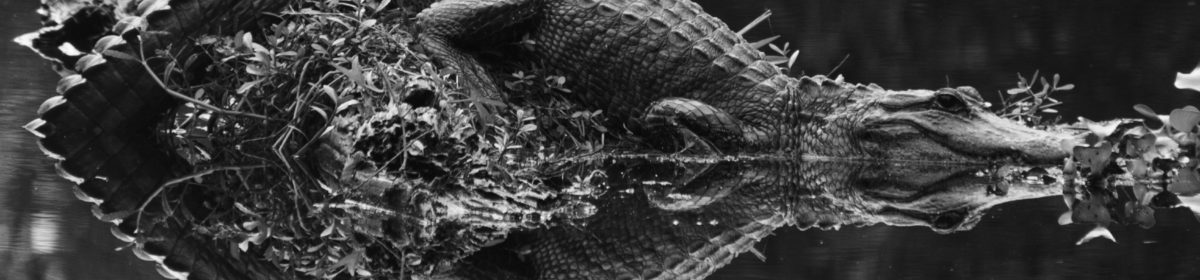
Getting Oriented [Encore Publication]: Shooting vertically as well as horizontally expands your artistic vision

Who says a portrait image has to be shot in portrait orientation, or that a landscape photo must be shot using landscape orientation?  Rules are meant to be broken, and they call it “artistic license” for a reason.  I would estimate that a third of my people images are shot in landscape (horizontal) orientation, and that a third of my landscape images are shot in portrait (vertical) orientation.  It’s always a good idea to shoot at least a few frames in both orientations so you can decide later which ones work best for your artistic vision.  Let’s take a look at a few examples.

Laura is one of my all-time favorite models (she also creates all her own costumes and does her own hair and makeup), and she looks great framed in any orientation, but I think her remarkable inventiveness is shown to good advantage in this composition using landscape orientation.  Buy this photo

It’s a cliché that people pictures should be composed vertically, so that we can fill the whole frame with the model’s head or full body.  A lot of the time this portrait orientation works well.  But there are some good reasons to shoot people images using landscape orientation as well as portrait orientation.

First, sometimes the model’s pose or the environmental elements around the model favor a horizontal image.  When traveling, I like to shoot environmental portraits that show us more than just the person by including elements of his or her home, livelihood, or lifestyle.

Second, we need to think about how the image will be used.  If I’m shooting publicity photos for musicians, for example, I know they need horizontal images at least as often as vertical images, so as to meet the requirements for the venues and promoters with whom they work.  Magazines and billboards often require landscape orientation, as well.  Even more prosaic uses of our photos, such as Facebook or LinkedIn cover photos, must be oriented horizontally.

Third, some portraits just cry out artistically to be framed in landscape orientation.  The image of the model Laura, above, for example, just works better to my eye in horizontal format, because the negative space behind her leads the viewer’s eye to admire her remarkably creative style, and leaving the lower part of her body and her dress out of the image allows us to focus on her expressive face.

By the same token, there are some good reasons to shoot landscape images in portrait orientation.

First, there could be some limitations to the left or right of the frame that, when shot horizontally, could distract from the power of the image we want to create.  Think about a coastal landscape with a glorious sunset sky and delightful foreground elements such as rocks with water flowing around them, but to the left of our vantage point there’s an unattractive pile of litter.  Frame the image in portrait orientation and avoid the problem.

Second, there are publication media where portrait orientation is required.  Knowing where the image is likely to be published will dictate the orientation in which we shoot.  A card or trifold brochure, for example, will likely require a vertical shot.

Third, again, consider your creative vision.  This night landscape of the Milky Way over Yosemite National Park’s Half Dome also worked beautifully in the more traditional landscape orientation, but here I shot the same scene using portrait orientation to frame the granite mountains with a circle of trees and to create a leading line using the Milky Way’s galactic core to bring the viewer’s eye around the valley’s landforms and the night sky.

This night shot of the Milky Way over Yosemite Valley works especially well in portrait orientation because the pine trees create a frame around the leading line of the galactic core.  Buy this photo

Whenever possible, remember to mix it up and shoot with the non-standard orientation for at least a few frames.  You may find your best shots–and the most marketable ones for placement in certain forums–are the ones you make using the unconventional orientation.

Do you have a favorite image that you shot using the opposite orientation from the expected one?  Please share your experiences here.

Want to learn some more photographic techniques?  Here’s a list of all my posts dealing with the technical aspects of travel photography: http://www.to-travel-hopefully.com/category/techniques/


Filtered Down to the Essentials [Encore Publication]: Why you should always have these filters in your bag

Filters are the Rodney Dangerfield of photographic gear: They don’t get enough respect.  Most photographers will begin to salivate when talking about the latest camera bodies or lenses and even plates or heads for our tripods, but we tend to think of filters as pedestrian items, if we think about them at all.  I nearly always make room in my bag for several filters, and I believe that using them properly is more important than what camera or even which lens I choose.  Let’s look into why these affordable little accessories are so important.

Three kinds of filters are essential gear for most photographers.  I’ll cover each type here.  Note that you must use a filter that is the correct size to attach to your lens.

It’s a good idea to keep a UV filter (also known as a haze filter) attached to your lenses at all times, as this helps protect the front element of the lens from fingerprints, moisture, and even scratches.  In addition to offering some physical protection for your lens, a good UV filter can also improve image quality when there is atmospheric haze or moisture in the air.  Use a good quality filter, though, as some can adversely affect your image quality.  I would recommend removing the UV filter when shooting with certain other combinations of filters, as the edges of the image can be cut off (vignetting) with too thick a stack of filters on the end of the lens.  In most cases, use of a UV filter does not affect the exposure more than about half a stop, so they can be used in most lighting conditions. I’ve had good luck with Hoya UV filters.  Always be sure to look at the specifications for your lens before buying any screw-on filter, because the diameter of the filter thread must match the size of the lens.

The second must-have type of filter is the circular polarizer.  A polarizing filter can reduce glaring reflections and can darken skies and enhance natural colors.  This little gadget is almost a secret weapon for making images that really pop.  Again, I like the Hoya products, which are thin, well made, and perform as they should.

It takes a bit of practice to learn to use a polarizing filter properly.  While looking through your camera’s viewfinder or LCD screen, turn the outer part of the filter slowly to see the effect.  The greater the angle between the light source (typically the sun) and the shooting direction, the bigger the effect of turning the outer ring of the filter.  You will observe as you rotate the outer ring of the filter that the sky, clouds, and any bodies of water will transform quite dramatically.  When you see the effect you like best, overshoot a little bit and then rotate the outer ring back to where you want it.  In most cases, I recommend not using the maximum amount of polarizing effect when there are reflections from water or glass, because you usually want some of these reflections to be visible in your final image, but this is art, not science, so you get to choose the effect you want.  Note that using a polarizing filter will cost you about 2-3 stops of exposure.  You will have to use a slower shutter speed and/or faster ISO or wider aperture, so use a steady tripod if the lighting conditions are dim.

Here’s an example of a shooting situation in which a polarizing filter can really make an image pop.  For this shot of the imposing peaks in Southern Patagonia’s Torres del Paine National Park, I rotated the polarizer to about 2/3 of its maximum effect to darken the sky, make the clouds more dramatic, and bring out the bright sheer faces of the granite peaks.

A circular polarizing filter makes a big difference when shooting mountains, skies, and/or bodies of water.  Buy this photo

The final essential filter is the neutral density (ND) filter.  These reduce the amount of light that reaches the camera’s sensor, so you can use slower shutter speeds to blur motion, or so you can use a wider aperture to get a shallow depth-of-field, even in bright sunlight.  ND filters come in different strengths as designated by the number in the filter’s specifications.  For example, an ND2 filter blocks 1/2 the light for a one-stop reduction in exposure, while an ND8 filter blocks 7/8 of the light for a three-stop reduction in exposure.  It’s a good idea to carry a range of ND filters for each lens you plan to use in the field.  A newer type of ND filter even allows for variable adjustment of the strength of the ND effect with just one filter, but these tend to be expensive.

A classic example of a situation in which you’d want to use an ND filter is when shooting moving water in bright lighting conditions.  You may want to use a longer shutter speed to blur the water, but even at your camera’s lowest ISO setting and your lens’ smallest aperture there could still be too much light for a slow shutter speed.  Mounting an ND8 filter to your lens will allow you to use a shutter speed eight times longer than without the filter, so for example you could move from shooting at 1/30 of a second to 1/4 of a second.

Here’s a photo of my younger daughter by a waterfall in Yosemite National Park.  The image was made in the early afternoon under very bright sunlight, bright enough that even using my camera’s slowest native ISO sensitivity and my lens’s most narrow aperture, I would still have had to use a shutter speed of 1/60 of a second, which would have frozen the water in the falls.  Using an ND8 filter, however, I was able to slow down the shutter speed to 1/8 of a second, long enough to impart a nice blur to the falling water.

 Use of a neutral density filter allowed me to blur the falling water even under very bright lighting conditions.  Buy this photo

I recommend carrying a kit containing several ND filters of different strengths for each lens you plan to use for landscape images.  Once again, make sure the diameter of the filter matches the diameter of the lens you intend to fit it to.

Note that there’s another type of ND filter called the “graduated ND filter,” and filter varies the light-blocking effect from one end of the filter to the other end.  I used to use this type of filter quite often, but in this digital era I find it usually works just as well to simulate the effect of a graduated ND filter using post-processing software later.

Armed with these three types of filters, you will be prepared to create the images you have in your mind, even under challenging shooting conditions.  Happily, filters are small, light, and not terribly expensive, making them one of the better values we photographers can find.

Which filters do you always carry, and when have you found them most useful?  Any tips or tricks on how to use filters for the best results?  Please leave a comment in the box after this post to share your thoughts.

Want to see more posts about photography gear?  Find them all here: Posts on Gear.

The Camera Eats First [Encore Publication]: How to make delicious images of local food specialties

A big part of the joy of travel is learning about the local food and drink.  For the travel photographer, local culinary specialties represent a cornucopia of image possibilities.  In this post, we’ll look at some food images and discuss a few tips and tricks to make delectable photos of the victuals we meet while traveling.  Warning: Do not read this post while hungry.

When photographing plated food, it’s best to get in close.  Shoot straight down or at a slightly oblique angle, and always check your background to ensure it is as uncluttered as possible.  Be aware of your focal point and depth of field (how much of the image is in focus) so that the most important part(s) of your image are sharp.

For this photo of a cheese plate in Burgundy, France, I got in close to the subject and chose a small aperture to ensure all the different cheeses were sharply in focus.  Buy this photo

Don’t forget that  specialty drinks are also a big part of local culture.  For example, in Argentina the deep love of mate (pronounced MAH-tay), a local infusion, becomes almost a religious practice.  This image of the mate service engages all the senses with its bright colors, contrasting textures, and suggestion of the smell and taste of the drink. To capture a sense of the Argentinian obsession with mate, I shot this image of the serving of the drink with all its components.  I wanted to include some of the environment around the mate tray as well.  The scene was lit with natural light, which further saturated the bright colors.

Argentina’s national obsession, mate.  Buy this photo

Always be on the lookout for local dishes that are unusual or exotic to our own sensibilities.  This image of the local Peruvian specialty cuy, or guinea pig, has sold well on American and European stock photography sites because the main ingredient is so unfamiliar to our palettes.  I love the saturated colors and the humor inherent in the guinea pigs holding peppers in their mouths.  The ocher wall makes a lovely background to offset the colors of the dish.  To capture this image of Peruvian cuy served during a home-hosted lunch, I got in close as the hostess held up her dish, ensuring that the ocher wall behind was all that was visible in the background.  I chose a wide aperture to slightly blur one of the guinea pigs and the wall.  I used natural lighting with just a kiss of off-camera flash to accentuate the highlights.

 Cuy (guinea pig) is a Peruvian delicacy.  Buy this photo

Sometimes it is the ingredients rather than the final dish that are most interesting.  While on a shore excursion on the Greek island of Rhodes, my family saw these beautiful octopuses hanging to dry in the sun.  After photographing them, we ordered a plate of grilled octopus.  We very nearly missed the sailing of our ship, as the taverna’s cook took her time to grill the dish, but it was absolutely worth it!

Obviously, natural light was the way to go with this image.  I wanted to get in close, but not too tight, so that the lovely Rhodes scenery would be partly visible behind the drying octopus.  I used a medium-wide aperture to slightly soften the background.  Buy this photo

What’s even better than food images?  Portraits of local people making or serving the food!  Here’s a shot of a server holding up a tray of Istanbul’s best baklava.  The background is a bit cluttered, but I like this image for its blending of the beautiful dessert tray with the pride of the man serving it.

Often a street vendor, cook, or restaurant server will be reluctant to have their portrait made but will be happy to pose with their wares.  For this portrait of an Istanbul baklava server, I chose a wide-angle lens and got in very close to the food tray to emphasize the baklava while including the server in the composition.  Just natural light and balanced fill flash were used as lighting.  Buy this photo

Street markets are a wonderful source of travel images.  They tend to be bright, colorful, exotic, and characteristic of the location.  Be aware that some vendors will expect you to buy something if you want to photograph their wares.

I like the contrasting colors in this shot of Istanbul’s ancient Spice Market.  Buy this photo

Nearly every culture around the world has its own version of barbecue, and in my broad and diverse travel experience, it’s all good.  Here’s a photo of whole branzino (Mediterranean sea bass) fish being grilled topside by the captain of our small wooden sailing ship on the Turquoise Coast of Turkey.  It was nearly completely dark, so I lit this image using light from the burning coals and a touch of flash.  A relatively high ISO was required to balance the low natural light with the need for a small enough aperture to keep the whole subject in focus.

Whole fish on the grill aboard a gulet yacht in Turkey.  Buy this photo

Sometimes a local cuisine is all about diversity, such as the Dutch-Indonesian specialty rijsttafel (rice table).  Some presentations of rijsttafel in Amsterdam involve over a hundred different tiny plates, each containing a different food preparation.  To capture this tapestry of tastes, I stood on the bench and shot obliquely onto the table top, including as much of the spread as I could.

Indonesian rijsttafel served in Amsterdam.  Note that in restaurants at night we have little or no control over the artificial lighting, which can sometimes lead to an unnatural color cast on the food.  Shoot in RAW format so you can adjust the color balance during post-processing when you get home.  Buy this photo

I grew up in New England, and after traveling to more than 100 countries around the world I can say with authority that few meals can beat a good old-fashioned New England clambake with lobster.  To capture this iconic image, I shot up close and directly toward the lobster, using a normal lens with a medium aperture.  This allowed most of the meal to be sharply focused, but with some falloff in sharpness toward the edges in order to emphasize the Maine event.  The contrasting colors between lobster, clams, and corn make for a pleasing composition.

A lobster clambake in Maine showcases the contrasting colors and textures of this delicious meal.  Buy this photo

As a parting shot, I’ll leave you with this image of French haute cuisine.  The gloriously prepared and plated fish course at Paul Bocuse’s three-Michelin-starred restaurant made a fun subject because it is whimsical and artistic at the same time.  The available lighting was soft and subdued for artificial light, so no flash was needed.  I shot some closer compositions of just the plate, but preferred this one with some of the table setting included.

Bon appétit!  Buy this photo

What are your favorite food photos?  Do you have tips on how to make food images really pop?  Please share your comments.

To Travel Hopefully is Taking the Day Off: Please help support this site

Dear Reader,

To Travel Hopefully is taking the day off, but don’t worry, we’ll be back with fresh new content soon.

In the meantime, please take a look at the helpful travel photography tips and inspiring images in our archived posts.  Just select a category (Destinations, Gear, Techniques, Travel, etc.) from the right nav bar, or choose a month under Archives, and browse to your heart’s content.

While you’re here, take a moment to tell your friends and family about us.  Anyone who enjoys travel and wants to improve their photography will find great daily content here, including inspiring images from around the world and tips and tricks for making the best possible photos.  You can email any post or share it via social media with the click of one of the buttons at the end of each post.  And if you enjoy To Travel Hopefully, please click in the right nav bar to subscribe via email or RSS feed, so you won’t miss a single post.

Please consider supporting this site by purchasing some of my photos, browsing for some great gear via the Amazon links, or clicking on some of the ads that interest you.

My holiday special promotion ended on Dec. 31, but I have lowered most of my regular prices considerably.  Fine art prints and novelty items are available in a wide variety of sizes and price ranges for nearly every image in my portfolio.  Please take a look at Featured Photos to see a sampling of my images available for purchase.

And finally, take a look at my upcoming photography tour of the Pacific Northwest, including the Great American Total Solar Eclipse, one of the most incredible astronomically events of our lifetimes.  I hope you can join us on this amazing tour this coming summer.

Thank you for visiting To Travel Hopefully!  Without your support, this project cannot continue providing you with daily content including inspiring travel photos and tips and tricks for making great images.

Warm regards,

Kyle Adler